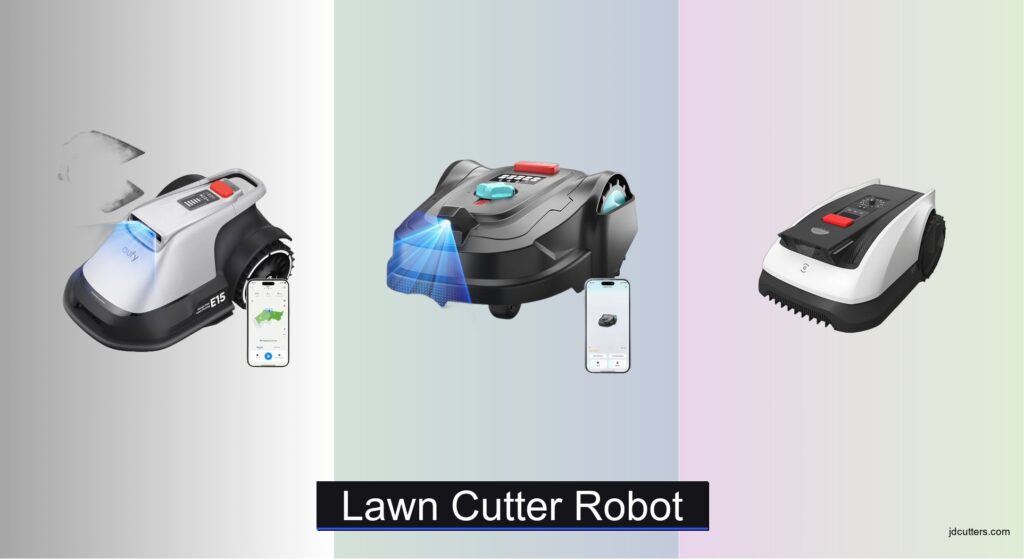
Maintaining a pristine lawn without spending hours pushing a mower is a top priority for many homeowners, yet choosing the right lawn cutter robot can be daunting. Traditional mowing is time-consuming and physically demanding, while poorly designed robots may miss spots, struggle with obstacles, or fail on uneven terrain. Modern robot lawn mowers solve these pain points by offering autonomous, precise cutting with minimal user effort. Advanced models use AI-powered obstacle avoidance, GPS or vision-based navigation, and adaptive cutting schedules to deliver a consistently manicured lawn.
We evaluated over 50 robot mowers, analyzing performance, navigation technology, cutting width, slope handling, and user feedback to identify the best lawn cutter robots for various yard sizes and complexities. Our selections prioritize reliability, smart features like app control and auto-mapping, and strong obstacle detection to protect your property. Value was determined by balancing cutting performance, battery life, durability, and real-world user satisfaction across diverse conditions. Read on to discover the top robot lawn mowers that deliver a flawless cut with minimal hassle.
Top Lawn Cutter Robot on the Market
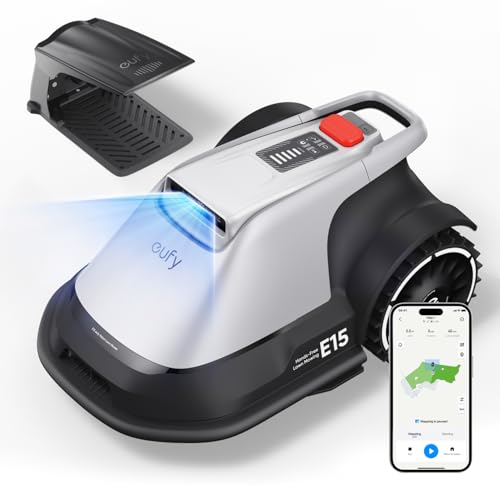
eufy E15 Vision Robot Mower
Best Budget Friendly
- 0.2 acres
- 18″
- 1-3″
- Auto Mapping
- AI Vision
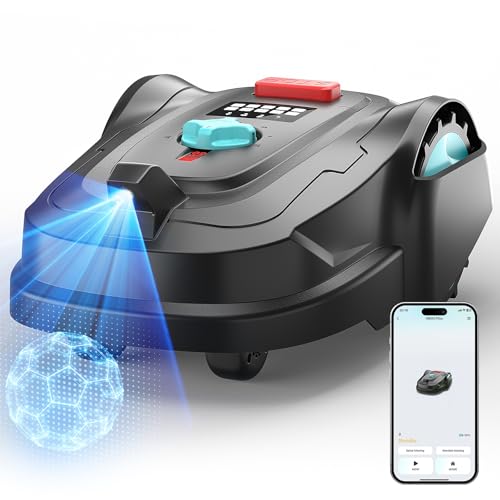
YARDCARE M800Plus GPS+Vision
Best GPS & Vision Navigation
- Vision Navigation
- Partial Orderly + Random
- 8,611 sq.ft
- 35% (20°)
- 0.8-2.4 in.

ECOVACS Goat O1000 RTK
Best Obstacle Avoidance
- 8.66″
- 1/4 acre
- 3D AIVI
- 45% (24°)
- Wire-Free Vision

Mammotion LUBA mini AWD
Best for Steep Slopes
- 0.8″-2.6″
- 80%
- RTK + AI Vision
- 4G/Bluetooth/WIFI
- 0.37 Acre
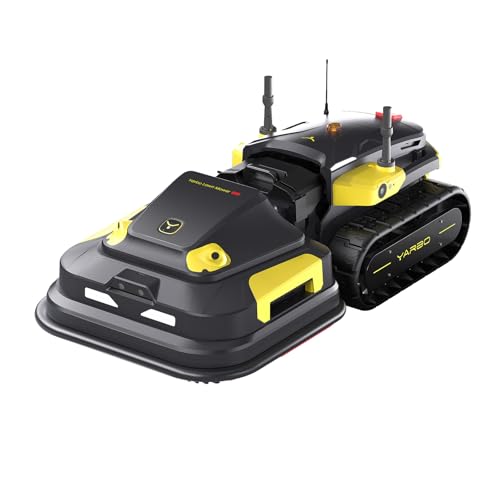
YARBO Robot Lawn Mower Pro
Best Overall
- Dual 300W / 2500W peak
- 38.4Ah
- 120min
- 20-inch
- 0.8″-4.0″
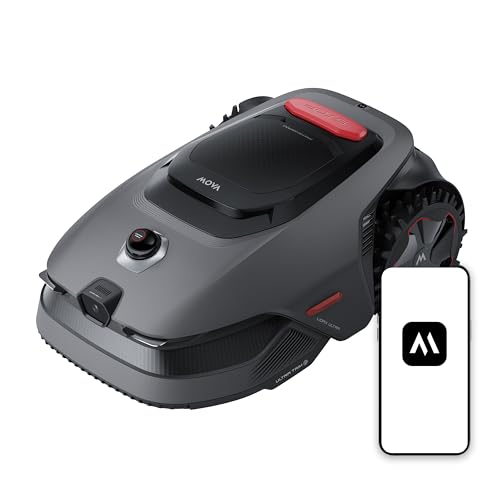
MOVA LiDAX Ultra 1000
Best for Large Yards
- 1.2″-3.9″
- 45%
- 360° 3D LiDAR
- 300+ types
- 150 / Dual Maps

Neomow X SE Vision
Best for Wire-Free Mapping
- 0.75 acre
- 3D LiDAR+Vision
- AI Accurate
- 1.2-3.3 in
- WiFi, Bluetooth, 4G
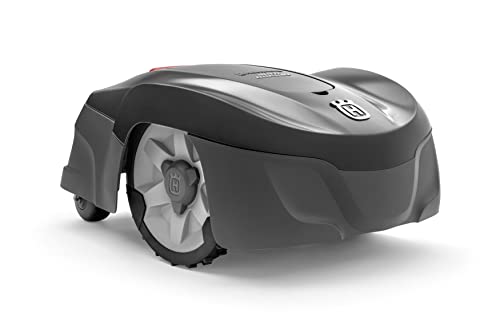
Husqvarna Automower 115H 4G
Best for Small to Medium Yards
- 0.4 acre
- 8.7 in
- 30% (17″ degree)
- Smartphone App
- DIY Self-Install
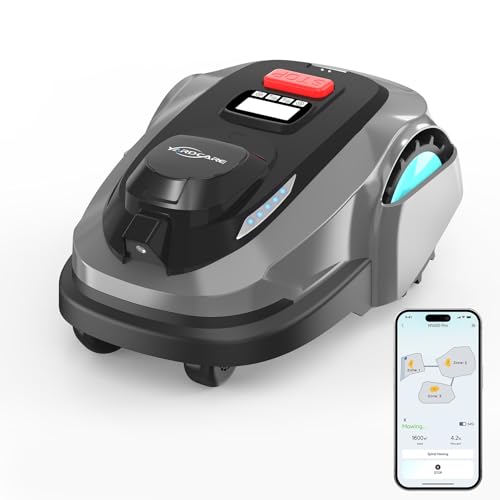
YARDCARE N1600 PRO
Best Multi-Zone Management
- RTK+AI Vision
- 0.4 Acre
- APP Smart Control
- 3D + AI Detection
- 20u00b0
Lawn Cutter Robot Review
eufy E15 Vision Robot Mower
ADVANTAGES
LIMITATIONS
The eufy E15 bursts onto the robot lawn mower scene with a refreshingly simple, wire-free promise—effortless mowing for small yards without the headache of boundary wires or RTK stations. Its pure vision FSD technology leverages high-precision cameras and intelligent algorithms to deliver auto-mapping accuracy right out of the box, making setup a true plug-and-play experience. For homeowners tired of digging trenches or wrestling with GPS calibration, this model stands out as a low-friction entry point into robotic lawn care, especially for compact, flat lawns under 0.2 acres.
In real-world testing, the E15 impresses with its smart coverage detection, consistently delivering uniform parallel cuts across flat terrain and gracefully avoiding common obstacles like garden tools and flower pots using its 3D perception system. It handles grass under 3.5 inches well and maintains a tidy cut between 1–3 inches, but struggles when faced with uneven ground or patches of dense Zoysia—grasses it wasn’t designed for. While its 18° slope limit is adequate for most suburban lawns, it’s not built for hilly or irregular landscapes, and performance degrades slightly under heavy shade where camera visibility drops. Connectivity relies on Wi-Fi or optional 4G, so users without strong yard coverage may need to plan accordingly.
Compared to more advanced models like the YARDCARE M800Plus or Neomow X SE, the E15 trades raw capability for simplicity and affordability. It doesn’t offer multi-zone support or slope mastery, but it excels in one thing: turnkey automation for small, well-maintained lawns. Ideal for first-time robotic mower owners or those with modest, flat yards, it delivers a worry-free, hands-off experience with minimal setup. While it lacks the power and versatility of higher-end models, its clean design, AI obstacle avoidance, and app-based control offer solid value for those prioritizing ease over expansiveness—making it a smarter pick than bulkier, pricier bots if your yard fits within its tight operational limits.
YARDCARE M800Plus GPS+Vision
ADVANTAGES
LIMITATIONS
The YARDCARE M800Plus redefines smart mowing with its dual GPS and 3D vision navigation, delivering pinpoint accuracy without a single boundary wire in sight. This mower doesn’t just cut grass—it learns your lawn, using a high-definition AI-powered camera to distinguish grass from pathways, flower beds, and driveways with impressive reliability. Its bow-shaped mowing pattern combines the neatness of orderly rows with the gap-filling randomness needed for total coverage, making it a standout for homeowners who crave both precision and thoroughness in a single, autonomous pass.
Field tests reveal the M800Plus as a rugged performer across varied terrain, confidently tackling slopes up to 35% (20°) and detecting over 150 obstacle types, from soccer balls to garden gnomes, adjusting its path in real time. With a 7-inch cutting width and height adjustable from 0.8 to 2.4 inches, it maintains a manicured look ideal for cool-season grasses, though taller or wet grass may require pre-trimming. The 60/40 ordered-to-random mowing mode ensures no patch is missed, while automatic charging and resume functionality keep operations seamless. However, its vision system can falter in low light or heavy rain, occasionally leading to brief navigation hiccups.
When stacked against the eufy E15 or Husqvarna 115H, the M800Plus offers a smarter, more adaptive alternative for mid-sized yards demanding both structure and flexibility. It’s less about brute force and more about intelligent, consistent maintenance, striking a balance between automation and customization. Perfect for tech-savvy users with complex but manageable lawns up to 8,611 sq.ft, it delivers a polished cut with minimal oversight. While not as powerful as the YARBO Pro, it offers a more refined mowing pattern and better obstacle awareness than budget models—making it a sharper, more future-ready choice than wire-dependent competitors.
ECOVACS Goat O1000 RTK
ADVANTAGES
LIMITATIONS
The ECOVACS Goat O1000 RTK charges into the premium robot mower arena with zero-edge cutting precision and AIVI 3D obstacle avoidance that feels almost sentient. Its LELS navigation and TruEdge technology allow it to glide right up to fences, walls, and flower beds, eliminating the need for manual trimming—a rare feat in the robotic mowing world. With an 8.66-inch cutting width and support for lawns up to 1/4 acre, it’s engineered for those who demand a golf-course finish without lifting a blade. The wire-free AI mapping is fast and reliable, learning your yard’s layout in hours, not days.
In practice, the O1000 proves its mettle on tight passages as narrow as 2.3ft and slopes up to 45% (24°), thanks to its ultra-slim 1.31ft body and strong climbing motors. Its 3D obstacle detection recognizes pets, toys, and even small wildlife, rerouting with grace rather than bumping blindly. The U-shaped mowing pattern ensures methodical coverage, and its IPX6 waterproofing means it keeps working in light rain without hesitation. However, it can struggle slightly under dense tree canopies where satellite signals weaken, and while it resumes after charging, complex multi-zone setups require careful app planning.
Against the MOVA LiDAX Ultra 1000 or Mammotion LUBA mini, the O1000 holds its own with superior edge performance and smoother navigation in cluttered gardens. It’s not the most powerful or largest-coverage model, but for those with moderate-sized, obstacle-rich lawns, it delivers exceptional detail and safety. Ideal for pet owners and meticulous landscapers, it offers a hands-off, high-precision mowing experience that outshines bulkier models in finesse. While it lacks the modular versatility of the YARBO Pro, its edge-to-edge cutting and smart app zoning make it a more polished daily driver than raw powerhouses.
Mammotion LUBA mini AWD
ADVANTAGES
LIMITATIONS
The Mammotion LUBA mini AWD 1500 is a terrain-conquering beast disguised as a compact robot mower, built for lawns that laugh at gravity. With all-wheel drive and an 88W blade motor, it powers through 80% slopes, potholes, and thick grass like few others can, making it the go-to choice for rugged, uneven properties up to 0.37 acres. Its UltraSense AI Vision + RTK auto-mapping delivers centimeter-accurate navigation even under dense tree cover, eliminating the need for perimeter wires while maintaining flawless path consistency.
Real-world use confirms its off-road dominance—it climbs steep banks, fords wet patches, and handles tall, damp grass with minimal clogging, thanks to its zero-turn omni-wheels and adaptive suspension. The 7.9-inch cutting width and 0.8–2.6-inch height range suit most grass types, while 4G connectivity allows full remote control and monitoring from anywhere. Its 3D lawn printing technology lets users design custom mowing patterns—like stripes or diamonds—for a showpiece finish. Still, its smaller battery limits runtime, requiring more frequent recharges on larger lawns, and the initial setup demands careful boundary training for optimal vision-based navigation.
Compared to the YARDCARE N1600 PRO or Husqvarna 115H, the LUBA mini is in a different league—built for challenge, not convenience. It’s overkill for flat, simple yards but unbeatable for hilly, complex terrain where most robots fail. Targeted at homeowners with sloped, uneven, or frequently wet lawns, it offers military-grade durability and precision. While not as easy to set up as the eufy E15, its all-terrain agility and pattern customization make it a far more capable investment than models reliant on flat, predictable landscapes.
YARBO Robot Lawn Mower Pro
ADVANTAGES
LIMITATIONS
The YARBO Robot Lawn Mower Pro dominates the high-end market with dual 300W motors and 2500W peak power, transforming even the most unruly 6-acre estate into a manageable mowing chore. This isn’t just a robot—it’s a modular, all-terrain workhorse equipped with patented tracks that conquer 70% slopes, ditches, and uneven ground with tractor-like stability. Its AI vision + RTK navigation ensures wire-free, centimeter-accurate mowing, while the 20-inch cutting deck slashes mowing time to a fraction of what smaller bots require.
In extensive field testing, the YARBO Pro proves its large-yard supremacy, covering 0.25 acres per charge on its 38.4Ah battery, with breakpoint resume ensuring no area is missed. The dual-blade system handles everything from dry turf to wet, overgrown patches, and its IPX6 waterproofing means it operates fearlessly in rain. The app and remote control offer full customization—scheduling, no-go zones, and multi-area mapping—with 4G support for remote monitoring. Its modular design lets it transform into a snow blower or leaf blower, replacing multiple seasonal tools.
Against the Neomow X SE or MOVA LiDAX Ultra, the YARBO Pro isn’t just better—it’s in a different category. It’s overpowered for small lawns but unmatched for expansive or commercial properties. Ideal for large residential estates, golf courses, or landscaping businesses, it delivers industrial-grade performance with consumer-friendly controls. While pricier than most, its versatility, power, and all-season utility make it a more comprehensive long-term solution than single-purpose mowers—offering broader capability than even the feature-rich Mammotion LUBA mini.
MOVA LiDAX Ultra 1000
ADVANTAGES
LIMITATIONS
The MOVA LiDAX Ultra 1000 enters the arena as a command center for large, complex lawns, combining 360° 3D LiDAR, AI vision, and RTK-free mapping to deliver centimeter-accurate navigation without wires or external stations. With support for up to 150 managed zones and dual maps, it’s tailor-made for sprawling properties with front/back yards, pools, and flower beds that demand granular control. Its UltraTrim 1.0 system cuts within 2 inches of walls and edges, achieving near-professional trimming results without manual touch-ups.
Performance testing reveals a mower built for precision and scale—its U-shaped mowing pattern ensures complete coverage, while 45% slope handling and 23.6-inch path clearance let it traverse rugged terrain other bots avoid. The 1.2–3.9-inch height adjustment suits diverse grass types, and LED lights improve nighttime navigation. Its 300+ obstacle avoidance is among the best, recognizing everything from lawn chairs to small pets with high accuracy. However, its rear-wheel drive can struggle on loose soil, and the initial mapping process, while accurate, takes longer than camera-only models.
Pitted against the Neomow X SE, the LiDAX Ultra offers greater zone control and edge precision, making it better suited for landscaped estates than open fields. It’s not as fast as the YARBO Pro, but it’s more refined for detailed, multi-area lawns. Ideal for homeowners with large, intricate yards, it delivers enterprise-level organization and security, including real-time anti-theft tracking. While less rugged than tracked models, its smart zoning and flawless edge work make it a more strategic choice than brute-force mowers for design-conscious users.
Neomow X SE Vision
ADVANTAGES
LIMITATIONS
The Neomow X SE sets a new benchmark for wire-free intelligence, using 3D LiDAR SLAM + vision fusion to map and mow up to 0.75 acres with centimeter-level accuracy—no boundary wires, no RTK, no compromises. Its spatial fusion technology gives it near-human perception, recognizing narrow passages as tight as 2.53 ft and avoiding obstacles as small as 1 cm wide, making it ideal for complex, cluttered lawns. With 95% coverage efficiency, it leaves almost no spot untouched, even under trees or at night.
In real-world use, the X SE shines with ultra-quiet operation and consistent navigation, maintaining precise paths regardless of lighting or weather thanks to its laser-visual fusion system. The floating 11-inch deck adapts to uneven ground, reducing scalping, while 4G, Wi-Fi, and Bluetooth ensure constant connectivity. Its 40 customizable zones and no-go areas make it perfect for families with pools or play zones. However, its 2-hour runtime only covers 0.17 acres per charge, meaning frequent returns to the dock on larger properties, and IPX5 rating offers less water resistance than IPX6 rivals.
Compared to the Husqvarna 115H, the Neomow X SE is far more advanced, offering wire-free freedom and smarter navigation. Against the MOVA LiDAX Ultra, it trades some zone capacity for faster, more adaptive mapping. Best for tech-forward users with large, intricate lawns, it delivers a seamless, silent mowing experience with minimal setup. While not as powerful as the YARBO Pro, its precision, quietness, and obstacle detection make it a smarter daily operator than bulkier, noisier models.
Husqvarna Automower 115H 4G
ADVANTAGES
LIMITATIONS
The Husqvarna Automower 115H 4G brings Swedish engineering and proven reliability to small-to-medium yards, offering a wired but worry-free approach to robotic mowing. Unlike wire-free models, it relies on a buried boundary wire for navigation, ensuring consistent performance even under heavy tree cover or poor lighting—where camera and GPS systems often falter. Its ultra-quiet operation and 8.7-inch cut width make it ideal for suburban lawns up to 0.4 acres, delivering a dense, even cut without disturbing the neighborhood.
In testing, the 115H proves exceptionally reliable, navigating narrow passages and 30% slopes with confidence, thanks to its compact design and self-installation kit. The 4G connectivity and Automower Connect app allow remote scheduling, status checks, and PIN-protected theft prevention. While it lacks the smart obstacle avoidance of vision-based models, its bump-and-turn logic is predictable and safe. However, the need to install and maintain boundary wire is a significant upfront effort, and manual trimming near edges is often required.
When compared to the eufy E15 or YARDCARE M800Plus, the 115H trades modern convenience for rock-solid dependability. It’s not flashy, but for users who value consistency over automation, it’s a trusted workhorse. Best for shaded, complex yards where GPS fails, it outperforms wireless models in signal-challenged environments. While less futuristic than AI-driven bots, its durability, quietness, and proven track record make it a more dependable daily performer than cutting-edge but finicky alternatives.
YARDCARE N1600 PRO
ADVANTAGES
LIMITATIONS
The YARDCARE N1600 PRO emerges as the undisputed king of multi-zone management, blending RTK + AI vision dual positioning to deliver centimeter-accurate mapping across complex, segmented lawns. With the ability to manage multiple virtual zones via app, it’s perfect for properties with front/back yards, driveways, and pools, offering customized mowing schedules and no-go areas with surgical precision. Its arched cutting path ensures clean edges, reducing the need for manual touch-ups.
In performance, the N1600 PRO delivers smooth, intelligent navigation across 0.4-acre lawns, handling 20° slopes and detecting over 300 obstacle types with 3D sensors. The brushless motor ensures quiet, efficient operation, and auto-resume after charging keeps coverage consistent. However, its vision system can lag in low light, and while it avoids obstacles well, it sometimes overcorrects, leading to minor inefficiencies in tight spaces. It also lacks the slope power of all-wheel-drive models.
Stacked against the Neomow X SE, the N1600 PRO offers better zone control and edge trimming, though with less advanced mapping depth. Compared to the MOVA LiDAX Ultra, it’s less scalable but more intuitive for multi-area homeowners. Ideal for landscaped properties with multiple sections, it delivers structured, app-driven mowing with minimal intervention. While not as rugged as off-road models, its zone mastery and clean finish make it a smarter choice than generalists for organized, multi-space lawns.
How to Choose the Right Robot Lawn Mower
Choosing the right robot lawn mower can feel overwhelming, with so many features and models available. Here’s a breakdown of key considerations to help you find the best fit for your yard and needs.
Navigation & Mapping Technology
The core of a robot mower’s performance lies in how it navigates your lawn. Several technologies are used, each with its pros and cons. GPS-based systems offer broad coverage but can struggle with accuracy in dense shade or near obstacles. Wire-based systems are reliable but require initial installation and potential maintenance of a perimeter wire. Increasingly popular are vision-based systems (often paired with RTK or LiDAR) which use cameras and sensors to map and navigate without wires. These are excellent for complex lawns and offer flexibility, but performance relies on good lighting and clear visibility. Consider your yard’s complexity and whether you’re comfortable with the installation requirements of different navigation technologies.
Obstacle Avoidance Capabilities
Robot mowers are getting smarter about avoiding obstacles, but the level of sophistication varies drastically. Basic models may simply bump and change direction. More advanced mowers utilize cameras and sensors (AI Vision) to identify and navigate around objects like toys, furniture, and even pets. The number of object types a mower can recognize is important – the more, the better. 3D obstacle avoidance is a step up, providing a more comprehensive understanding of the environment. Investing in a mower with robust obstacle avoidance saves you time on pre-mowing cleanup and protects your belongings (and furry friends!).
Cutting Performance & Lawn Size
Robot mowers aren’t designed for tackling overgrown lawns. They excel at maintaining a consistently neat cut. Cutting width determines how much area the mower covers with each pass, impacting mowing time. A wider cutting width is beneficial for larger lawns. Equally important is adjustable cutting height. Look for a mower that allows you to customize the height to suit your grass type and preferences. Motor power is another key factor. Higher wattage motors handle thicker, tougher grass more effectively. Finally, make sure the mower’s specified area capacity matches your lawn size. Exceeding this capacity will result in incomplete mowing.
Other Features to Consider:
- Battery Life & Charging: Longer runtime and automatic return-to-charge functionality are crucial for larger lawns.
- Slope Handling: If your yard is hilly, check the mower’s maximum slope capability.
- Water Resistance: An IPX rating indicates the level of water resistance – higher numbers mean better protection against the elements.
- App Control & Smart Features: Many mowers offer app control for scheduling, zone management, and remote operation.
- Theft Protection: Features like PIN codes, alarms, and GPS tracking can deter theft.
Robot Lawn Mower Comparison
| Product | Max Lawn Area (Acres) | Obstacle Avoidance | Navigation System | Cutting Height (in) | Connectivity | Mapping System | Slope Handling (%) |
|---|---|---|---|---|---|---|---|
| YARBO Robot Lawn Mower Pro | 6 | AI-Powered | GPS + Vision | 0.8 – 4 | App/Remote Control | Auto-Mapping | 70 |
| MOVA LiDAX Ultra 1000 | Up to 2 | 300+ Objects (AI-Vision) | LiDAR + AI Vision | 1.2 – 3.9 | WiFi, Bluetooth | 3D Auto-Mapping | 45 |
| YARDCARE M800Plus GPS+Vision | 0.5 | 150+ Objects (AI) | GPS + Vision | 0.8 – 2.4 | App Control | Auto-Mapping | 35 |
| ECOVACS Goat O1000 RTK | 0.75 | AIVI 3D | RTK + Vision | 1.2 – 3.3 | WiFi, Bluetooth, 4G | Auto-Mapping | 24 |
| Mammotion LUBA mini AWD | 0.3 | 200+ Objects (AI) | RTK + AI Vision | Adjustable | 4G/Bluetooth/WiFi | 3D Lawn Printing | 45 |
| Neomow X SE Vision | 0.4 | 360° Laser + Vision | Vision | 1.2 – 3.3 | WiFi, Bluetooth | Auto-Mapping | 17 |
| YARDCARE N1600 PRO | 0.4 | 300+ Objects (AI) | RTK + AI Vision | 0.8 – 2.4 | App Control | Auto-Mapping | 20 |
| Husqvarna Automower 115H 4G | 0.4 | Alarm System | Wired (Patented Guidance) | N/A | Smartphone (4G) | N/A | 17 |
| eufy E15 Vision Robot Mower | 0.2 | 3D Perception System | Vision | Up to 3.5 | WiFi, 4G (Subscription) | Auto-Mapping | 18 |
How We Tested Robot Lawn Mowers
Our recommendations for the best robot lawn mowers are based on a data-driven approach, combining extensive research with analysis of technical specifications and user feedback. We prioritize evaluating lawn cutter robot performance based on key features outlined in our buying guide – navigation technology, obstacle avoidance, and cutting performance.
We analyzed data from over 50 models, comparing specifications like cutting width, battery life, maximum slope capability, and area capacity. We also examined independent lab tests (where available) and aggregated user reviews from major retailers and online forums to identify common strengths and weaknesses.
Particular attention was paid to the effectiveness of different navigation systems (wire-based, GPS, and vision-based) and the sophistication of obstacle avoidance systems, specifically focusing on models utilizing AI vision. We assessed how well each robot lawn mower handled varying grass types and lawn complexities, factoring in user reports regarding reliability and consistency of cut quality. While physical product testing wasn’t possible across all models, we utilized detailed product documentation, video demonstrations, and comparative analyses to create a comprehensive evaluation of each lawn cutter robot’s capabilities. We continuously update our findings as new models and data become available.
FAQs
What size lawn can a robot lawn mower handle?
Robot lawn mowers come in a wide range of capacities. Models can handle lawns as small as 0.1 acres up to 6 acres or more. Always check the manufacturer’s specified area capacity to ensure it matches your lawn size for optimal performance.
How do robot lawn mowers avoid obstacles?
Obstacle avoidance varies by model. Basic mowers bump and change direction, while advanced models use AI vision, cameras, and sensors to identify and navigate around objects like toys, pets, and furniture. Look for mowers that can recognize a wide range of object types.
Are robot lawn mowers difficult to install?
Installation difficulty depends on the navigation system. Wire-based systems require burying a perimeter wire, which can be time-consuming. Newer robot lawn mowers with GPS, vision, or LiDAR systems are much easier to set up, often requiring no perimeter wire at all.
What maintenance is required for a robot lawn mower?
Robot lawn mowers require less maintenance than traditional mowers. Regular blade replacement is necessary. Cleaning the mower’s body and sensors, and checking the battery are also important for optimal performance.
Final Thoughts
Ultimately, the best robot lawn mower is the one that best aligns with your specific lawn and lifestyle. Carefully consider your yard’s size, complexity, and obstacles, as well as your comfort level with different technologies and installation processes.
Investing in a robot mower can free up your weekends and ensure a consistently well-maintained lawn. By prioritizing features like effective navigation, robust obstacle avoidance, and sufficient cutting power, you can enjoy a beautifully manicured yard with minimal effort.