
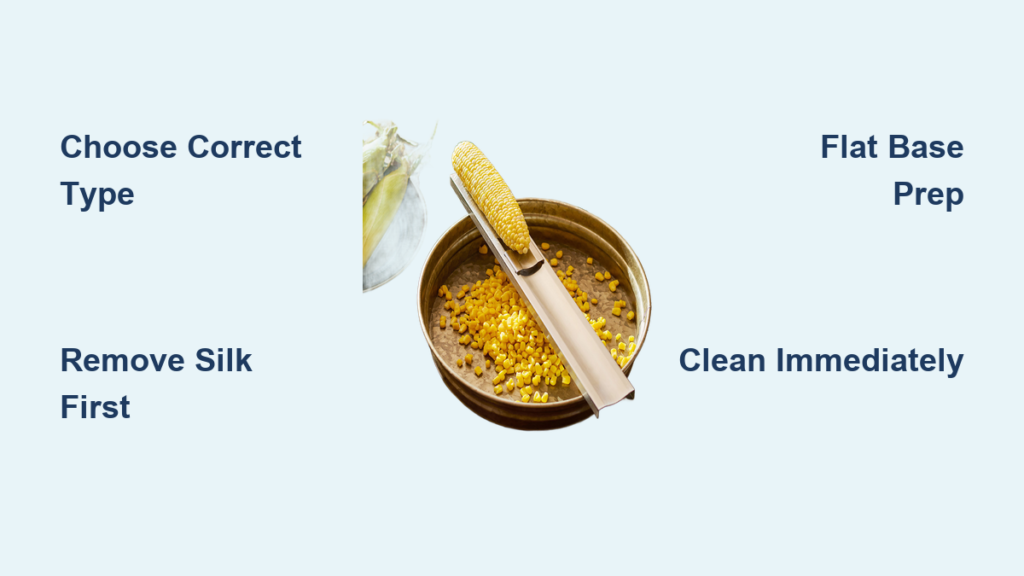
That moment when you’re staring at a pile of fresh summer corn, dreading the messy struggle of knife-slicing kernels across your counter? You’re not alone. How to use corn cutter techniques transform this frustrating chore into a 30-second task that preserves every plump kernel. Whether you’re prepping salsa for tonight’s dinner or freezing bushels for winter chowder, mastering your corn cutter means no more wasted kernels, slippery counters, or uneven cuts. In this guide, you’ll learn foolproof methods for every cutter type, avoid the top 3 mistakes that ruin kernels, and discover restaurant tricks for perfect results every time.
Fresh corn waits for no one—its sugars start converting to starch the moment it’s picked. But with the right how to use corn cutter approach, you’ll lock in that sweet crunch while saving 70% of the time compared to knife methods. Let’s turn your corn prep from chaotic to effortless.
Choose Your Corn Cutter Type

Match your tool to your needs—using the wrong style wastes kernels and causes frustration. The perfect cutter depends on batch size and precision required.
Ring-Style Strippers
Push cobs through this circular blade for instant kernel removal. Ideal for 1-3 ears, it directs kernels straight into your bowl with minimal bounce. Pro tip: Hold it over a wide container—kernels fly outward at high speed during the first push. Works on raw or cooked corn, but raw yields cleaner cuts.
Cylindrical Cutters
Twist cobs inside this tube-shaped device while applying downward pressure. Kernels drop neatly through the base into containers below. Perfect for processing 10+ ears; the enclosed design contains mess. Warning: Don’t force stubborn cobs—this crushes kernels. Tap the cylinder gently to release jams instead.
Handheld Curved Cutters
Follow the cob’s contour with this knife-like tool for precision work. Essential when you need partial kernels (like for corn relish) or want to leave decorative cob sections intact. Requires steady pressure control—too light leaves kernels, too heavy shreds them.
Prep Corn Before Cutting
Skipping prep guarantees clogged cutters and uneven results. This 90-second step doubles your kernel yield.
Select Fresh Ears
Choose corn with bright green husks that feel slightly damp to the touch. Avoid brown-tipped silk or loose kernels. Visual cue: Plump, tightly packed rows indicate peak freshness. Test one kernel—if it spurts milky liquid, it’s ready.
Remove Husks and Silk
Peel husks downward in one motion, then rinse under cool water while rubbing with a vegetable brush. Critical step: Silk strands jam cutter mechanisms. Rub ears vigorously until no threads cling to kernels.
Create Flat Surfaces
Trim 1/4 inch from the narrow tip and 1/2 inch from the stalk end. Why this matters: Flat bases prevent rolling during cutting. Unstable cobs cause uneven pressure, leaving 30% of kernels behind.
Master Ring-Style Cutting
This method processes an ear in 10 seconds but demands precise alignment. One misstep wastes half your kernels.
Position Your Cutter
Anchor the ring cutter firmly over a large bowl (at least 12 inches wide). Pro move: Place a damp towel under the bowl—it stops sliding when kernels hit the sides. Blade must face upward; inverted placement crushes kernels.
Align and Push
Insert the narrow end straight into the ring center. Apply steady downward pressure without twisting—let the blade glide through. Common error: Angling the cob creates diagonal cuts that shred kernels. Keep it perfectly vertical.
Complete Each Pass
Push until the cob fully emerges. Rotate 90 degrees and repeat once if needed. Time-saver: One full push removes 90% of kernels on fresh corn. No second pass required for most varieties.
Perfect Cylindrical Technique
Twisting motion is key—too slow leaves kernels, too fast jams the device. Find your rhythm with these steps.
Insert and Twist
Place cob in the cylinder until it meets resistance. Simultaneously twist clockwise while pushing down. Visual cue: Kernels should rain steadily into your container—not in clumps. Pause if flow stops.
Collect Efficiently
After each cob, tap the cylinder base 3 times over your bowl. Pro tip: Hold it 2 inches above the container—this dislodges stubborn kernels without scattering them.
Check Progress
Remove cob halfway through to inspect. Troubleshooting: If kernels cling to the cob, increase twist speed slightly. Never force downward pressure—that damages blades.
Handheld Curved Cutter Method
This technique demands control but delivers chef-level precision for gourmet dishes.
Stabilize Your Cob
Stand corn upright on a damp towel-lined cutting board. Grip the top with a kitchen towel for slip resistance. Safety must: Keep fingers behind the cutter—not alongside it.
Slice Smoothly
Angle the blade at 45 degrees against the top kernel row. Draw downward in one fluid motion, applying consistent pressure. Warning: Jerky movements create ragged cuts that leak juice.
Rotate Systematically
Turn the cob 1/8 turn after each pass. Use the cutter’s tip in tight spaces between rows. Pro move: Work top-to-bottom in sections—don’t try to cut the entire ear in one go.
Achieve Restaurant-Quality Results
Top chefs use these tricks to process 50+ ears hourly with zero waste.
Maintain Sharp Blades

Dull blades crush kernels into mush. Test: Fresh corn should slice with zero resistance. Sharpen monthly using a diamond file along the blade edge. Replace cylindrical cutters when twisting requires visible strain.
Control Kernel Size
For uniform pieces (critical in salads), maintain identical cutting speed. Adjustment: Tilt handheld cutter blades slightly for smaller kernels in salsas, or keep level for chunky chowder.
Extract Corn “Milk”
After kernel removal, scrape the cob’s surface with the cutter’s dull side. Why bother: This starchy liquid adds natural sweetness to cornbread and soups—never discard it.
Batch Process Like a Pro
Transform corn prep from a chore into an efficient assembly line.
Set Up Assembly Line
Arrange stations: shucked corn on left, cutter center, storage containers right. Time impact: This reduces processing time by 40% for 5+ ears. Keep a silk disposal bowl nearby.
Use Bundt Pan Hack
Place cob in an inverted bundt pan’s center hole. Cut kernels fall into the pan’s bowl, containing 100% of the mess. Bonus: The pan’s weight stabilizes rolling cobs.
Pre-Soak for Easier Cutting
Soak unhusked corn in cold water 10 minutes pre-shucking. Science: Water loosens kernel bases, reducing required cutting force by 30% and preventing hand fatigue.
Safety First, Always
Corn cutters cause 200+ ER visits yearly—avoid becoming a statistic.
Protect Your Hands
Wear cut-resistant gloves for batches over 6 ears. Critical: Choose gloves with textured palms—they maintain grip on slippery corn. Never use bare hands with cylindrical cutters.
Cut Away From Body
Always direct cutting motion toward an empty counter space. Why: Blade slips send kernels flying at 15+ mph—never position your torso over the cutter.
Secure Your Surface
Place a damp kitchen towel under cutting boards. Visual test: Press down hard—if the board slides, reposition it. Moving surfaces cause uneven cuts and slips.
Clean and Maintain Tools
Corn residue hardens within 30 minutes—clean immediately to avoid permanent gunk.
Immediate Post-Use Cleaning
Rinse under warm water within 5 minutes of use. Pro method: Use a soft-bristled toothbrush to dislodge silk from blade teeth—never your fingers.
Deep Clean Weekly
Soak disassembled parts in warm soapy water 15 minutes. Sanitize: Add 1 tbsp bleach per gallon of water for 5 minutes, then rinse thoroughly.
Store Properly
Dry completely before storage—damp blades rust overnight. Storage hack: Hang ring cutters upside-down on hooks to protect edges. Wrap cylindrical cutter blades in paper towels.
Fix Common Cutting Problems
Diagnose issues in seconds with these targeted solutions.
Why Kernels Mush Instead of Cut
Cause: Dull blades crushing instead of slicing. Fix: Sharpen immediately with a diamond file. Test on a spare kernel—if it indents without cutting, blades need replacement.
When Cutter Clogs Constantly
Cause: Silk remnants jamming mechanisms. Fix: After shucking, rub corn vigorously under running water with a vegetable brush. Rinse cutter teeth between every 2 ears.
Uneven Cutting Patterns
Cause: Inconsistent pressure during passes. Fix: Practice on less valuable ears first. For cylindrical cutters, use guide marks on the device to maintain even twist speed.
Store Cut Corn Correctly
Preserve peak flavor with science-backed storage.
Refrigerate Fresh Kernels
Pack in airtight containers within 2 hours of cutting. Max freshness: Store at 34°F (use a fridge thermometer)—warmer temps accelerate starch conversion. Use within 72 hours.
Freeze for Long-Term Storage
Spread kernels in single layers on baking sheets. Freeze 2 hours, then transfer to labeled freezer bags. Pro tip: Press air out completely—this prevents freezer burn for 12+ months.
Save Cobs for Stock
Simmer empty cobs with 1 onion and 4 cups water 45 minutes. Flavor boost: Add 1 tsp salt and 2 garlic cloves. Freeze stock in ice cube trays for instant chowder base.
Creative Applications Beyond Corn
Unlock hidden functions your cutter manual never mentioned.
Process Other Vegetables
Use ring cutters for hominy or field corn—adjust pressure for harder kernels. Test first: Try one kernel to avoid blade damage from overly dense varieties.
Make Corn “Ribs”
Quarter cobs lengthwise before cutting. Presentation hack: These narrow strips cook evenly in stir-fries and let kernels cling better to dishes.
Create Decorative Elements
Use handheld cutters to make mosaic patterns with multi-colored corn varieties. Pro tip: Work on dark plates—kernels pop visually against contrasting backgrounds.
Mastering how to use corn cutter techniques turns corn season from a sticky struggle into pure joy. Start with sharp blades and flat-surfaced cobs, then match your cutter type to your batch size—ring cutters for quick meals, cylindrical for big harvests. Remember: clean immediately after use to prevent rust, and never skip the silk removal step. Within minutes, you’ll process ears faster than you’d believe possible while saving every precious kernel. That perfect ear of corn you’ve been chasing? It’s waiting at the end of your cutter blade—grab your next cob and get slicing.