
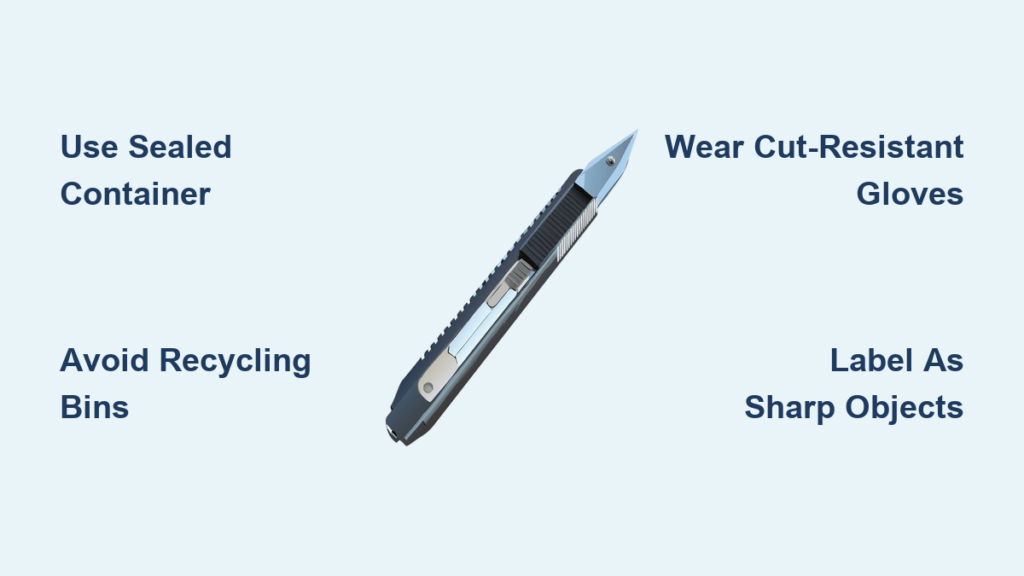
That dull box cutter blade finally gave out mid-project, and now you’re holding a dangerously sharp piece of metal with nowhere safe to put it. You’re not alone—most people either toss used blades in the regular trash or leave them lying around, creating hazards for family members, pets, and especially waste management workers who handle your garbage. Proper disposal of these razor-sharp utility knife blades isn’t just smart—it’s a critical safety practice that takes mere seconds but prevents serious injuries.
Box cutter blades cause thousands of preventable injuries annually when improperly discarded. The good news? You don’t need expensive equipment to handle this hazard safely. Whether you’re a contractor changing blades daily or a homeowner who uses a utility knife occasionally, this guide shows you exactly how to dispose of box cutter blades safely using both commercial solutions and everyday items you already have at home.
Why Standard Trash Disposal Puts Everyone at Risk
How Loose Blades End Up Causing Injuries
When you toss a used utility blade directly into your household trash, it creates multiple danger points throughout the waste chain. Waste collection workers often sort through trash by hand at transfer stations, and even at home, family members might reach into a bin without seeing the hidden hazard. One careless grab can result in deep lacerations requiring stitches or worse.
Blades that puncture through regular trash bags become invisible threats. They might lie dormant until someone steps on them after disposal or they work their way to the surface during transport. Plastic grocery bags offer zero protection against these thin, sharp edges—never use them as makeshift blade containers.
Legal and Environmental Considerations
While most municipalities allow sealed blade containers in regular trash (not recycling), some localities have specific regulations about sharp object disposal. Throwing blades into recycling bins creates dangerous situations for sorting facility workers and can contaminate entire batches of recyclables. Always check your local waste management guidelines before developing your disposal routine.
Transform Your Workspace with Integrated Blade Systems

Dewalt’s Dual-Purpose Dispenser Solution
Dewalt Carbide Edge 50-count blade packs solve your disposal problem while storing fresh blades. These smart dispensers feature a top-loading slot specifically designed to accept spent blades instantly. Once inserted, blades remain securely contained—they won’t spill out during normal handling and only exit when the entire unit is deliberately shaken in a specific manner.
Installation Pro Tips:
– Mount your dispenser at shoulder height using the built-in keyhole slots
– Position it within arm’s reach of your primary cutting station
– Ensure it’s secured vertically to prevent accidental tipping
– Works with Dewalt, Stanley, Milwaukee, and other major brands
Contractors who change blades multiple times daily find this system eliminates the “where do I put this?” dilemma that leads to unsafe disposal habits. The convenience of one-handed operation means you’ll actually use the system consistently.
Standalone Commercial Disposal Containers
If you prefer different blade brands or already own bulk quantities, purpose-built blade containers offer excellent alternatives. These specialized units feature thick metal construction that prevents punctures, narrow slots that accept blades but block hand access, and secure locking lids. Unlike makeshift solutions, these containers undergo safety testing to ensure reliable performance.
Look for containers with clear “SHARP OBJECTS” labeling and sturdy bases that prevent tipping. The best models fit neatly in toolboxes or on workshop shelves while holding 50-100 blades before requiring emptying.
Build Your Own Blade Disposal System in Minutes

Convert Household Items Into Safety Solutions
You don’t need to spend money to create an effective blade disposal system. Transform items already in your home using these proven methods:
Metal Soup Can Method:
– Remove paper labels and clean thoroughly
– Use tin snips to create a narrow vertical slot in the lid
– Place the can in a stable location away from traffic areas
– Seal with duct tape once 3/4 full and label “SHARP BLADES – DO NOT RECYCLE”
Thick Plastic Container Hack:
– Select vitamin bottles or supplement containers with walls at least 3mm thick
– Cut a precise blade-width slot in the cap using a craft knife
– Test by inserting a blade—no wiggling room should exist
– Store in your tool drawer with other cutting supplies
Reinforced Cardboard Box:
– Choose double-wall corrugated packaging material
– Line interior with extra cardboard layers and secure with heavy-duty tape
– Create a narrow blade insertion slot on the top surface
– Mark prominently with red “DANGER – SHARP OBJECTS” warnings
Container Safety Checklist Before Use
Your DIY container must pass these critical tests:
– Puncture test: Press firmly against sides with a screwdriver—no flexing
– Spill test: Shake vigorously—blades shouldn’t shift dangerously
– Confusion check: Doesn’t resemble food or drink containers
– Access test: Impossible to reach blades through the insertion slot
Never use containers with wide openings, thin walls, or food/drink branding—these create dangerous confusion scenarios that defeat the purpose of safe disposal.
Match Your Disposal System to Your Blade Usage
Calculate Your True Disposal Needs
Your blade consumption pattern determines the right solution:
Heavy Users (Contractors):
If you go through 10 blades daily, a 50-count dispenser gets emptied weekly. Commercial systems with wall mounting provide the fastest, safest disposal method during your workflow.
Moderate Users (Active DIYers):
Changing 2-3 blades weekly means a 50-count dispenser lasts 4-6 months. A wall-mounted commercial unit or sturdy DIY container works perfectly.
Light Users (Occasional Household):
With just 1 blade per week, a 50-count pack lasts about a year. A simple soup can or plastic container suffices since you’ll rarely need to empty it.
Most people buy blades in small 5-10 count packs, delaying proper disposal system implementation. If you’re in this category, start with a DIY solution now rather than waiting for bulk purchases.
Implement Your Blade Disposal System Today
Four-Week Setup Plan for Permanent Results
Week 1: Assessment
Count your current blade inventory and estimate monthly usage. Evaluate your workspace for mounting options—vertical surfaces near cutting areas work best.
Week 2: Decision
Choose between commercial and DIY based on your usage pattern and budget. Purchase necessary components or gather household items for conversion.
Week 3: Installation
Mount commercial dispensers securely or create and label your DIY container. Test the system with one blade to ensure smooth operation.
Week 4: Habit Formation
Place your disposal system within arm’s reach of your cutting area. Dispose of blades immediately after changing—never set them aside “for now.”
Overcome Common Implementation Barriers
Don’t fall for these dangerous delay tactics:
– “I’ll set it up with the next blade change” (you won’t)
– “I don’t have enough used blades yet” (one blade creates the need)
– “This temporary container will work for now” (temporary becomes permanent)
Start immediately with any metal container you have available. A soup can under your workbench today beats perfect planning that never happens.
Safe Emptying Procedures for Full Containers
Commercial Dispenser Protocol
When your Dewalt or similar dispenser fills up:
1. Check monthly by weight—full units feel noticeably heavier
2. Wear cut-resistant gloves during handling
3. Seal the entire unit with heavy-duty tape
4. Label clearly as “SHARP OBJECTS – DO NOT RECYCLE”
5. Place directly in regular household trash (not recycling)
6. Replace immediately with a new dispenser
DIY Container Emptying Process
For homemade containers:
1. Never fill beyond 3/4 capacity to prevent accidental punctures
2. Seal completely with multiple overlapping tape layers
3. Write the disposal date on the exterior
4. Place in regular trash—never recycling
5. Create your replacement container before emptying the current one
Most municipal waste systems accept properly sealed blade containers in regular trash, but always verify local regulations. Never place loose blades in recycling bins—that’s how serious injuries occur at sorting facilities.
The difference between a safe workspace and a hazardous one comes down to systems you actually use consistently. Whether you choose Dewalt’s integrated dispenser or transform a simple soup can, implementing your blade disposal method today prevents injuries tomorrow. Your future self—and anyone who handles your trash—will thank you for taking this small but critical safety step.
Start with whatever solution fits your current setup, then refine as your needs evolve. The perfect disposal system is simply the one you’ll use every single time you change a blade. Don’t wait for “next time”—secure that used blade right now using the method that works for you today.