
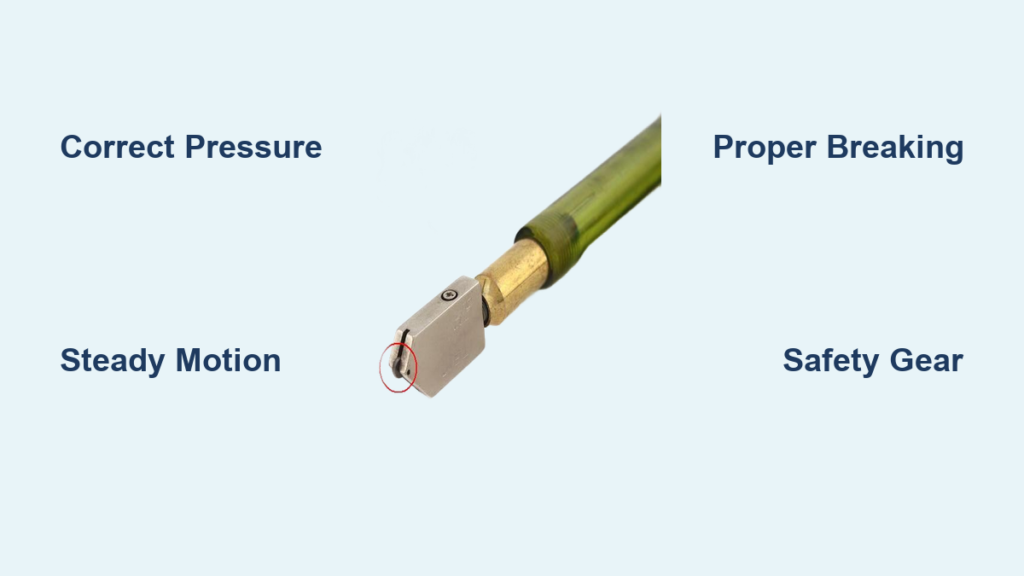
You’re holding a piece of glass that’s just slightly too big for your project. Instead of paying $50 for a professional cut or scrapping your entire project, you can make that precise cut yourself in minutes with a glass cutter wheel. This essential tool creates controlled fractures in glass through a simple scoring process, but proper technique separates clean breaks from costly mistakes. Whether you’re installing a window, creating stained glass art, or sizing a mirror, mastering how to use a glass cutter wheel transforms frustrating failures into flawless cuts every time.
Most beginners don’t realize that 90% of glass cutting failures stem from improper scoring technique rather than the tool itself. The right pressure, consistent motion, and proper breaking method create perfect results on your first attempt. This guide reveals professional techniques that work for all glass types and thicknesses, helping you avoid the most common pitfalls that waste materials and time.
Essential Tools and Setup for Flawless Glass Cutting

Required Glass Cutting Equipment Checklist
Before attempting your first cut, gather these critical tools: a glass cutter wheel with 5-6mm tungsten carbide wheel for general work, a perfectly flat cutting surface (24″×24″ plywood or MDF board), 1/4″ felt underlayment to cushion the glass, ANSI-approved safety glasses and cut-resistant gloves, a steel ruler and permanent marker for precise measurements, and specialized breaking tools like running pliers and grozing pliers. Never attempt glass cutting without proper eye protection—glass shards can cause permanent vision damage.
Workspace Preparation for Maximum Control
Set up your cutting station at waist height on a rock-solid surface—wobbling tables guarantee crooked scores. Position multiple light sources to eliminate shadows that hide scoring imperfections; LED work lights work best for revealing subtle surface flaws. Layer newspaper or felt under the glass to absorb vibration and protect both your work surface and the glass underside. Ensure you have at least three feet of clearance around your workspace for safe breaking movements—glass fragments can travel surprisingly far during breaks.
Glass Inspection and Marking Protocol
Thoroughly clean the glass with ammonia-based cleaner and a lint-free cloth to remove all oils and debris that interfere with scoring. Carefully inspect for microscopic chips or cracks—any flaw within 1/2″ of your cut line will cause catastrophic failure. Mark your cut line with permanent marker, then double-check measurements. Remember to account for the cutter wheel’s 1/8″ offset from the ruler edge when positioning your guide. For critical projects, score a test line on the glass edge first to verify wheel condition and your pressure technique.
Perfect Score Technique: The Foundation of Clean Breaks
Correct Cutter Position and Grip for Precision
Hold the glass cutter like a pencil but with firm, controlled pressure—your index finger should rest on top applying downward force while thumb and middle finger guide direction. Keep your wrist rigid and straight; any wobble creates uneven scores that cause breaks to wander. Position yourself directly over the cut line with feet shoulder-width apart for maximum stability. The cutter must maintain a perfect 90-degree angle to the glass surface throughout the entire scoring motion—tilting even slightly creates shallow scores that won’t break properly.
Applying the Exact Pressure for Optimal Scoring
Apply consistent, moderate pressure of approximately 5-6 pounds as you cut—enough to create a visible score line but not so much that you risk immediate breakage. You’ll know you’ve got the right pressure when you hear a consistent “zipper” sound; too quiet means insufficient pressure while grinding noises indicate dangerous over-pressing. Practice on scrap glass first to calibrate your hand—thicker glass requires 20-30% more pressure than standard window glass. Never stop mid-score; continuous motion creates the clean fracture line essential for straight breaks.
Mastering the Scoring Motion for Flawless Results
Begin your score 1/8″ from the glass edge with the wheel perfectly perpendicular to the surface. Push forward at a steady 6-8 inches per second using your entire arm—not just your wrist—for smooth, consistent motion. Maintain even pressure from start to finish; most beginners lighten pressure near the end, causing the break to veer off course. Complete the cut in one single pass only—multiple scores over the same line weaken the glass and guarantee chipping. For curved cuts, create a template from 1/8″ Masonite and maintain constant pressure against its edge throughout the motion.
Breaking Methods That Deliver Professional Results
Hand Breaking Technique for Straight Cuts
Place your thumbs 2-3 inches apart on either side of the score line with palms against the glass surface. Apply gradual downward pressure while simultaneously lifting the glass edges slightly with your fingers. The break should propagate cleanly along your score line with a satisfying “crack.” If resistance occurs, reposition hands closer to the score line rather than increasing pressure. Always wear cut-resistant gloves during breaking—glass edges are sharper than razor blades and can cause serious lacerations.
Running Pliers Method for Precision Breaks
Position the pliers’ center mark directly over your score line with both jaws evenly spaced from the cut. Squeeze the handles gently until you hear the fracture propagate through the glass. This method excels for straight cuts on multiple pieces, preventing hand fatigue while delivering consistent results. Always support both sides of the glass during the break to prevent uncontrolled shattering. For cuts under 6 inches, running pliers often produce cleaner edges than hand breaking.
Breaking Bar Technique for Large Sheets
Align your score line precisely over the breaking bar’s edge with the bar perpendicular to your cut. Apply even downward pressure on both sides of the glass simultaneously—never rock the glass during this process. This technique prevents flexing that causes breaks to wander off course, giving you maximum control over large pieces. For oversized glass, use multiple breaking bars spaced along the cut line to maintain consistent pressure across the entire break path.
Troubleshooting Common Glass Cutting Problems
Fixing Poor Score Lines Before They Ruin Your Project
Problem: Irregular, discontinuous score with visible gaps
Cause: Dull wheel or inconsistent pressure application
Solution: Replace wheel immediately and practice pressure on scrap glass
Prevention: Clean wheel with soft brush after every 3-4 cuts and maintain steady hand motion
Preventing Uncontrolled Breaks That Waste Materials
Problem: Glass fractures away from your marked score line
Cause: Insufficient score depth or improper breaking angle
Solution: Increase scoring pressure by 20% and verify score depth by looking for slight surface disruption
Critical check: Run your fingernail along the score—proper depth creates a subtle ridge you can feel
Eliminating Edge Chipping for Professional-Quality Results
Problem: Flaking and chipping along the cut edge
Cause: Excessive pressure or using a worn wheel
Solution: Reduce pressure and replace wheel if older than 50 cuts
Pro tip: For final cuts, score 1/16″ from your desired edge then remove the excess strip for the cleanest possible finish
Safety Protocols Every Glass Cutter Must Follow
Essential Safety Equipment Checklist
Never cut glass without ANSI-approved safety glasses—regular eyewear won’t stop high-velocity glass shards. Use cut-resistant gloves rated minimum ANSI level 3 that cover your wrists completely. Wear long sleeves and closed-toe shoes to protect against falling fragments. Keep a first aid kit within immediate reach containing bandages, antiseptic, and emergency contact information. For extended cutting sessions, add a dust mask to protect your lungs from glass particles.
Emergency Response Procedures
For cuts, apply direct pressure with a clean cloth and elevate the wound above heart level. Never use bare hands to pick up broken glass—always use a broom and dustpan with a wide lip. Dispose of glass fragments in puncture-resistant containers clearly marked “SHARP GLASS.” In case of eye injury, flush with clean water for 15 minutes while seeking immediate medical attention. Post emergency numbers visibly in your workspace and ensure someone knows when you’re cutting glass alone.
Final Takeaway: Mastering how to use a glass cutter wheel hinges on understanding the precise relationship between pressure, motion, and breaking technique. Start with simple straight cuts on inexpensive glass to build confidence and muscle memory before attempting complex projects. Your first successful cut builds confidence—your tenth reveals patterns in technique—and your fiftieth makes you the neighborhood’s trusted glass expert. Remember that every perfect cut begins with a flawless score, so practice pressure control on scrap glass until it becomes second nature. With these professional techniques, you’ll transform from hesitant beginner to confident cutter, saving money and completing projects that once seemed impossible.