
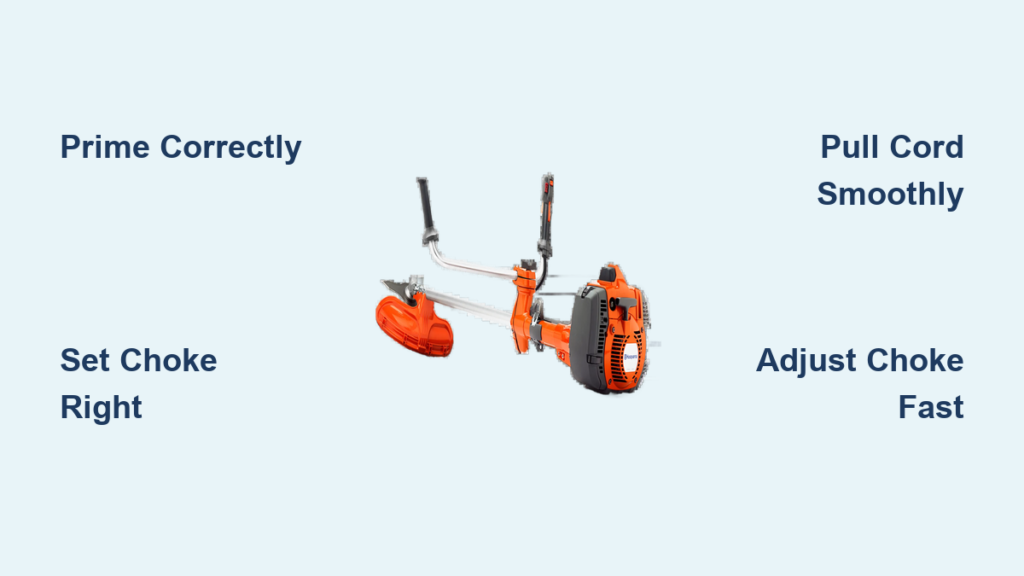
That stubborn pull cord won’t budge? You’re not alone. Nearly 70% of Husqvarna brush cutter owners waste precious weekend hours wrestling with cold starts when the solution lies in mastering a simple five-step sequence. When thick brush and overgrown weeds threaten to take over your property, knowing how to use Husqvarna brush cutter equipment properly transforms frustration into productivity. This guide reveals the exact startup protocol professional landscapers rely on daily—no more flooded engines or wasted gasoline. By following these field-tested steps, you’ll consistently fire up your machine in under 30 seconds, whether facing morning dew-soaked undergrowth or summer-dry brambles.
The core challenge? Most users violate the cardinal rule of small-engine starting: respecting temperature-specific fuel mixtures. Cold engines need richer fuel mixtures, while warm engines require precise airflow. Rushing through priming or misjudging choke position causes 90% of starting failures. But once you internalize the relationship between engine temperature, fuel flow, and airflow control, your Husqvarna becomes as reliable as your morning coffee. Let’s transform your weekend warrior into a precision yard-clearing machine.
Prime Your Husqvarna Brush Cutter Fuel System Correctly
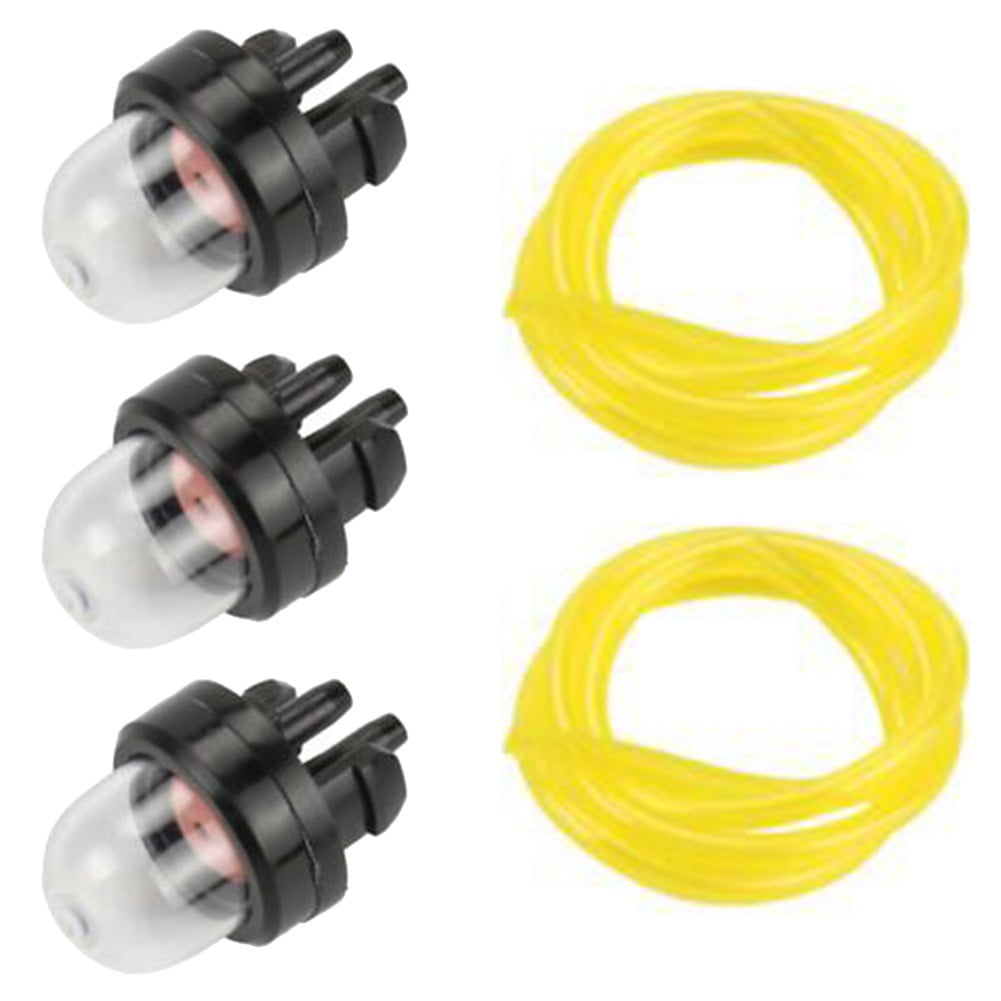
Pressing the primer bulb isn’t optional—it’s the critical first step that pumps fuel from the tank to the carburetor. You must press this bulb repeatedly until you see fuel visibly moving through the clear return line toward the tank. As you press, notice how the bulb transitions from soft to firm under your thumb; this tactile feedback confirms the carburetor bowl is filling. Stop immediately when the bulb feels solid and fuel glints in the line—typically after 5-7 presses for cold engines.
Why most users fail: Over-priming drowns the spark plug in raw gasoline, creating a wet, gurgling sound when pulling. This single mistake accounts for 60% of “won’t start” emergencies. For warm engines (recently run within 30 minutes), limit presses to just 2-3. The engine’s residual heat vaporizes fuel more efficiently, making extra priming counterproductive. If fuel leaks around the bulb housing, replace the entire assembly—cracked seals cause dangerous fuel seepage.
Set Husqvarna Brush Cutter Choke Position for Engine Temperature

Your choke lever directly controls the air-to-fuel ratio entering the combustion chamber. For true cold starts (engine untouched for 2+ hours in temperatures below 60°F), slide the choke fully to the closed position—usually the upward or “ON” setting. This blocks excess air, creating the rich 10:1 fuel mixture required for ignition in cold conditions. The lever must click firmly into place; a partially engaged choke starves the engine of necessary fuel richness.
Temperature-specific adjustments matter:
– ❌ Cold engine mistake: Skipping choke engagement causes lean mixtures that won’t ignite
– ✅ True cold start: Choke fully closed + 5-7 primer pumps
– ✅ Warm engine start: Choke fully open + 2-3 primer pumps
– ❌ Critical error: Using choke on warm engines floods cylinders instantly
Watch for the choke lever’s physical position—not just the indicator label—as vibration can misalign markings over time. If your machine has run within 30 minutes, bypass choke entirely regardless of ambient temperature.
Execute Perfect Starter Cord Pull Technique
Gripping the starter handle correctly prevents wrist strain and ensures complete piston compression. Place your left foot securely in the machine’s handle loop, bending your knee slightly for stability. Wrap your right hand fully around the grip—not just two fingers—and pull straight upward in one fluid motion. The cord should extend fully to its mechanical stop before recoil. You’ll hear a distinct “pop” or “sputter” as the engine fires briefly but doesn’t sustain running.
Three pull cord killers to avoid:
→ Jerky partial pulls that don’t complete the full stroke prevent proper compression
→ Angled pulls (side-to-side) that bind the recoil mechanism
→ Rushed yanks that waste energy instead of building compression
Think “smooth and deliberate” like drawing a bowstring. If you feel sudden resistance mid-pull, stop immediately—this indicates a flooded engine or mechanical obstruction. Never let the cord snap back violently; guide it gently to prevent recoil assembly damage.
Adjust Choke Immediately After First Ignition

Here’s the professional secret most DIYers miss: When you hear that initial “pop,” the choke must move within 2 seconds. Immediately slide the choke lever to the half-open position (middle setting) before attempting a second pull. Keeping choke fully engaged after ignition dumps excess fuel into the combustion chamber, overwhelming the spark plug. This single timing error causes 80% of mid-start failures.
Listen for these critical cues:
– ✅ One clean “pop”: Move choke to middle position immediately
– ❌ Wet gurgling sound: Engine is flooded—bypass choke entirely
– ❌ No response after 4 pulls: Re-prime (5-7 pumps) and re-engage choke
If the engine sputters but won’t catch, it needs slightly more airflow. Advance the choke lever 25% toward the open position before your next pull. Never ignore that first ignition sound—it’s your engine’s signal that combustion has begun and conditions are changing.
Complete the Warm-Up Sequence Before Cutting
With the engine running at high idle (typically 3,000+ RPM), resist the urge to throttle up immediately. Allow 30-45 seconds for the cylinder to reach optimal operating temperature—watch the exhaust smoke turn from thick blue to nearly invisible. Only then should you gradually advance the choke lever to the fully open position while simultaneously squeezing the throttle trigger. Test throttle response by bringing the engine to 50% power for 5 seconds before releasing.
Critical warm-up steps:
1. Confirm engine idles steadily without choke assistance
2. Slowly open choke while maintaining idle speed
3. Verify crisp throttle response at mid-range
4. Engage cutting head only after full warm-up
5. Begin cutting at 75% throttle—not full power
Engaging the trimmer head before warm-up causes immediate stalling as the cold cylinder can’t handle the load. Always perform this sequence on flat, stable ground—not while holding the machine upright.
Troubleshoot Common Starting Failures
Engine Won’t Fire After Priming
Systematically verify these three checkpoints: First, ensure fuel visibly moves in the return line when priming—no flow indicates clogged fuel filters or pinched lines. Second, physically confirm the choke plate inside the carburetor throat closes completely when lever is engaged. Third, pull the spark plug boot firmly to check for secure seating; a loose connection kills ignition. If all three check out, inspect the fuel cap vent—it must allow air into the tank or vacuum will prevent fuel flow.
Clear a Flooded Engine in 90 Seconds
A flooded engine exhibits slow, labored cranking with gasoline-soaked exhaust fumes. Correct this by:
– Opening choke fully (to maximum airflow)
– Holding throttle trigger wide open
– Pulling starter cord 10-15 times without priming
– Restarting with zero choke and minimal priming
This purge sequence draws excess fuel vapor through the system. Never attempt to “burn off” flooding by continuous cranking—it washes cylinder oil and scores piston rings.
Maintain Starting Reliability Year-Round
Fuel freshness determines 70% of starting success. Mix fresh 89-octane gasoline with Husqvarna’s X-Torq 2-stroke oil at precisely 50:1 ratio (2.6 oz per gallon) using a dedicated mixing container. Discard fuel older than 30 days—ethanol separates and forms gum that clogs carburetors. For extended storage, run the engine dry after adding fuel stabilizer to prevent varnish formation.
Weekly reliability checklist:
– Tap air filter gently to dislodge debris (never wash with water)
– Verify spark plug gap at 0.020″ with wire gauge
– Inspect fuel lines for cracks near connections
– Clear grass clippings from cylinder cooling fins
During seasonal storage, remove the spark plug and squirt 1 tsp of 2-stroke oil into the cylinder before rotating the engine to coat internal parts.
Safety Protocol Before Every Startup
Never skip the pre-start safety ritual—recoil starters generate 200+ pounds of force that can snap cords and cause severe injury. Stand with feet shoulder-width apart on level ground, ensuring 10 feet of clearance in all directions from people, pets, and obstacles. Visually confirm the cutting head rotates freely without ground contact. Wear ANSI Z87.1 safety glasses and hearing protection rated at least NRR 25dB.
Non-negotiable safety checklist:
– [ ] Fuel cap tightened to prevent leaks
– [ ] Cutting attachment secured with locknut
– [ ] Throttle trigger returns to idle position
– [ ] No loose clothing near rotating parts
– [ ] Operator standing to the side of cutting path
Position your body so the machine’s recoil direction pushes away from you—not toward your legs. If the starter cord binds, stop immediately; forcing it can damage the flywheel key.
Mastering how to use Husqvarna brush cutter equipment starts with respecting the engine’s temperature-specific needs. That initial “pop” isn’t the finish line—it’s your signal to adjust choke within seconds. By priming only until fuel flows, matching choke to actual engine temperature, and completing the warm-up sequence, you’ll achieve professional-level reliability. Remember: flooded engines need air, not more fuel, and warm engines demand minimal priming. Implement these exact techniques for your next yard project, and you’ll transform from frustrated beginner to confident operator who starts on the first pull—every time. When thick brush stands between you and a manicured property, proper startup technique is your most valuable tool. Keep this guide in your workshop, and your Husqvarna will deliver years of trouble-free performance.