That stubborn brush cutter head won’t budge no matter how hard you twist, and you’re risking stripped threads or worse—a dangerous failure mid-operation. Whether you’re swapping to tackle thick brush with a metal blade or switching to a line head for lawn edges, knowing how to change brush cutter head properly separates safe, effective operation from equipment damage and potential injury. Most DIY attempts fail because they miss critical safety steps or reverse the threading direction, leading to loose heads that can eject during use.
You’ve probably been told to “just loosen the nut,” but brush cutter heads have unique threading that catches even experienced users off guard. This guide reveals the exact sequence for both metal blade and line head changes across petrol, cordless, and electric models. By understanding the reverse-threading pattern and proper shaft locking technique, you’ll complete the job safely in under 15 minutes without damaging components.
Power Down Completely: The Critical First Step
Many DIYers assume switching off the trimmer is enough before changing the brush cutter head, but residual power can cause catastrophic accidents. A spinning shaft at full throttle can sever fingers in milliseconds—don’t learn this lesson the hard way.
Petrol brush cutters: Pull the spark plug wire completely free, not just disconnected. Cordless models: Remove the battery pack entirely from its housing. Electric trimmers: Unplug from the wall outlet—never rely solely on the power switch. Verify complete power disconnection by attempting to start the unit before proceeding.
Position Your Trimmer Correctly for Safety
Metal cutting blades require upside-down positioning to prevent accidental contact with sharp edges, while line heads need upright orientation for easier spool access. Lay the trimmer on a clean, stable surface with the cutting head fully exposed. Ensure the area is clear of debris that could interfere with shaft locking mechanisms.
Lock the Shaft Before Touching Any Nuts

Attempting to change a brush cutter head without locking the shaft guarantees stripped threads or injury. The small hole near your gearbox isn’t decorative—it’s your safety lifeline during head changes.
Insert a lock pin or appropriately sized Allen key into the gearbox hole while slowly rotating the shaft by hand. You’ll feel a distinct click when the locking mechanism engages. Test the lock by trying to rotate the shaft—any movement means it’s not properly secured. Never skip this step, even for “quick” head swaps.
Pro tip: Apply a small piece of colored tape to the locked position so you can quickly re-engage the lock after testing your new head.
Remove Metal Brush Cutter Blade Without Stripping Threads
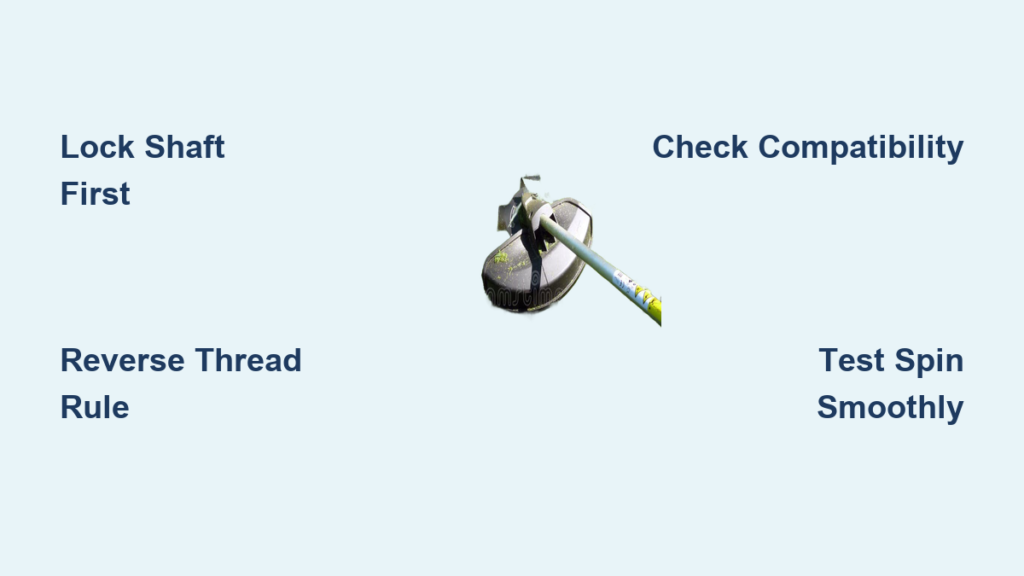
With your shaft locked and trimmer positioned upside down, locate the center nut securing your metal blade. Here’s where most DIYers fail—turn clockwise to loosen the nut. Yes, it’s reverse-threaded, which contradicts standard nut removal.
Use a combination socket tool to apply steady pressure while turning clockwise. Once loose, slide off the blade assembly including washer and rider plate as one unit. Crucially, leave the thrust plate mounted to the gearbox—it’s designed to stay in place during blade changes.
Inspect all components for damage before installing the new head. Replace any nuts with stripped threads immediately—forcing damaged hardware leads to dangerous head failures during operation.
Install New Metal Cutting Blade Properly
Position your replacement blade over the thrust plate, ensuring the collar seats fully into the blade’s center bore. Improper seating causes wobble and premature wear. Stack the thrust washer followed by the rider plate in the correct sequence—reversing these components compromises safety.
Thread the nut counter-clockwise to tighten—remember the reverse threading pattern. Apply firm, even pressure with your socket tool until snug, but avoid over-torquing which stresses the shaft. Remove the shaft lock and gently spin the blade by hand to verify smooth rotation without wobble.
Swap to Grass Line Head Without Cross-Thread Damage

Line heads follow a different threading pattern than metal blades. After locking your shaft, grasp the entire head assembly and turn clockwise to unscrew it from the shaft threads. Clean all debris from the shaft threads using a soft brush before installing the new head.
Position the replacement line head onto the shaft and turn counter-clockwise until it latches securely. Continue tightening while keeping the shaft locked to prevent cross-threading. Remove the lock pin and test rotation—the head should spin freely without wobble or resistance.
Important: STIHL AutoCut C 26-2 mowing heads (£42.80) require specific threading techniques different from standard metal blades. Always verify your model’s requirements before installation.
Verify Critical Compatibility Before Finalizing
Your new brush cutter head must match both your deflector and gearbox specifications—mismatched components cause dangerous ejection or gearbox damage. Check your operating manual for approved combinations as STIHL GrassCut 230-2/260-2 blades (£18.40+) have different mounting requirements than line heads.
Never assume compatibility based on similar appearance. The correct deflector must be approved for both your trimmer model and the specific head you’re installing. An improperly fitted deflector provides zero protection if the head fails during operation.
Troubleshoot Common Head Change Problems
Nut won’t budge: Apply penetrating oil and wait 10 minutes before trying again. Use a longer wrench handle for leverage, but stop immediately if threads begin stripping—replace the nut instead.
Blade wobbles after installation: Remove and recheck thrust plate seating. The collar must fit flush in the blade bore with no gaps. Verify you haven’t reversed the thrust washer and rider plate order.
Line head won’t thread properly: Clean shaft threads thoroughly and inspect for cross-threading damage. Start threading by hand in perfect alignment before using tools.
Maintain Your New Brush Cutter Head for Longevity
Check mounting hardware tightness after the first hour of use—new components settle during initial operation. Store your trimmer with heads removed during long-term storage to prevent thread corrosion, especially in humid environments.
Inspect metal blades monthly for cracks or chips, replacing immediately if damaged. Line heads require periodic reloading; check your model’s specific line diameter and length requirements to avoid poor performance.
Quick maintenance tip: Apply a drop of light machine oil to shaft threads before storage to prevent seizure—never use heavy grease that attracts debris.
STIHL-Specific Installation Considerations
STIHL brush cutters require precise head installation techniques that differ from other brands. The AutoCut C 26-2 mowing head installation demands careful thread alignment and specific torque settings. Watch manufacturer-approved videos like “How To Fit Blades On a STIHL Brushcutter” before attempting installation.
For STIHL GrassCut 230-2/260-2 blades, verify your model’s horsepower rating matches the blade specifications—using undersized blades on powerful engines causes dangerous failure. Always use genuine STIHL replacement parts to maintain warranty coverage and safety standards.
When to Call a Professional Instead
If you’ve stripped threads, notice significant shaft damage, or can’t achieve proper head alignment after multiple attempts, stop immediately. Forcing mismatched components creates dangerous operating conditions. Contact your authorized dealer with your specific model number—they can identify compatibility issues you might miss.
Professional installation typically costs less than replacing a damaged shaft or gearbox, and ensures your brush cutter head operates safely at full capacity. Don’t risk injury attempting repairs beyond your skill level.
Your brush cutter head change is complete when the new assembly spins smoothly without wobble or unusual noise. Test your trimmer at low speed first, listening for vibrations that indicate improper installation. By following these precise steps for how to change brush cutter head properly, you’ve extended your equipment’s life while ensuring maximum safety during operation. Remember that regular head maintenance prevents 90% of common brush cutter failures—check threads and tightness before every use for trouble-free performance.