
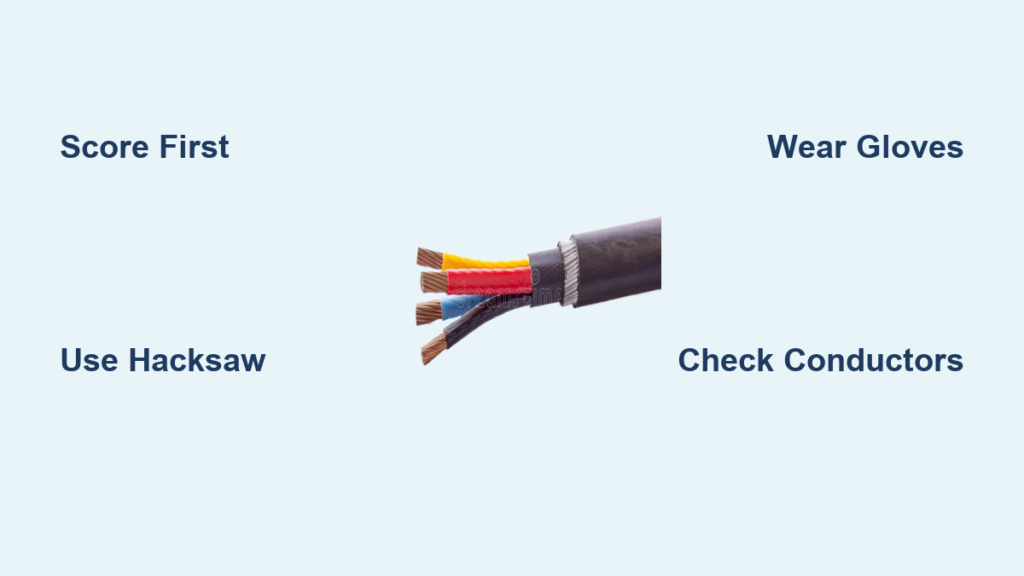
You’re elbow-deep in an electrical project when you realize the critical problem: your armored cable needs cutting, but the $200 specialized cutter is nowhere to be found. This frustrating scenario happens daily to electricians and DIYers alike. Whether you’re installing new wiring in an old building or making an emergency repair, cutting armored cable (BX or MC cable) without the proper tool seems impossible—until now.
The truth is you don’t need expensive gear to cut through that tough metal armor. With the right techniques using tools already in your garage, you can achieve clean, professional cuts that protect internal conductors. In this guide, you’ll discover five proven methods—each with specific safety protocols, step-by-step instructions, and critical warnings—so you never waste time or materials on botched cuts again. Forget replacing damaged cables; these techniques work on residential armored cable installations when you’re short on tools but long on results.
Critical Safety Steps Before Cutting Armored Cable

Never skip these life-saving steps:
1. De-energize completely: Use a non-contact voltage tester on ALL conductors, not just the outer armor. Armored cable often carries multiple live circuits.
2. Confirm aluminum vs. steel: Hold a magnet to the cable. Aluminum armor (non-magnetic) requires different handling than steel (magnetic).
3. Gear up: Safety glasses (ANSI Z87.1 rated), cut-resistant gloves (level 5), and long sleeves are non-negotiable. Metal shards travel at high velocity.
4. Secure the cable: Clamp with at least 6 inches of support on both sides of your cut line. A wobbling cable guarantees jagged edges and conductor damage.
Work area red flags:
– ✘ Cutting near flammable materials (angle grinders create 3-foot spark showers)
– ✘ Working at eye level (always cut below waist height)
– ✘ Using dull blades (causes binding and dangerous kickback)
Hacksaw Method: Most Precise Control for Steel Armor
Why this works for DIYers
The hacksaw gives unmatched control for cutting steel-armored BX cable without nicking internal wires. Unlike power tools, you feel each layer separating—critical when the armor is only 1/16 inch thick.
Step-by-Step Execution
1. Mark and score
Measure your cut point twice. Wrap painter’s tape around the cable at this mark, then score a shallow groove through the tape using a utility knife. This creates a visible guide you can’t lose mid-cut.
2. Perfect blade positioning
Install a 32 TPI bi-metal blade in your hacksaw. Clamp the cable horizontally in a vise with the tape mark facing up. Rest the blade in your scored groove, keeping it perfectly perpendicular to the cable.
3. The cutting rhythm
Start with light pressure for 10 strokes to establish depth. Then use full-length strokes at 60-80 strokes per minute. Rotate the cable 1/8 turn after every 50 strokes. Stop immediately when you feel the blade drop slightly—this means you’ve severed the armor but not the inner conductors.
4. Armor separation
Insert needle-nose pliers into the cut. Twist counterclockwise to break the armor’s interlock. Peel back like unzipping a jacket—never pull straight back, which tears conductors.
Pro tip: Dip the cut area in water every 2 minutes to prevent heat buildup that melts wire insulation.
Angle Grinder: Fastest Cut for Experienced Users
When to choose this method
Only attempt this if you have power tool experience. A 4-1/2″ grinder slices through steel armor in 15 seconds but risks catastrophic conductor damage if mishandled.
Critical Setup Checklist
- ✅ Use a 1/16″ thin cutoff wheel (NOT a grinding wheel)
- ✅ Install a fresh wheel—cracks cause explosions
- ✅ Wear a full face shield over safety glasses
- ✅ Clear 10-foot radius of flammables
Execution sequence
- Clamp cable on steel table with cut point over edge
- Start grinder away from cable, reach full RPM
- Touch wheel to armor at 15-degree angle, applying zero pressure
- Glide wheel through armor in one smooth motion
- Immediately stop when sparks cease (indicates armor separation)
Danger zone: If the wheel binds, release trigger and back off—never force it. A shattered wheel causes severe eye injuries.
Tin Snips Technique: Aluminum Armor Only
How to identify compatible cable
This method only works on aluminum-armored MC cable. Confirm with a magnet test:
– Aluminum: Magnet won’t stick, cable is lighter (silver color)
– Steel: Magnet sticks firmly (common BX cable)
Cutting procedure
- Make a small puncture in the armor with heavy-duty aviation snips
- Insert snip tips into puncture, following the armor’s spiral direction
- Cut along the spiral for 2 inches, then peel back like opening a soda can
- Repeat on opposite side to fully separate armor
Why steel fails: Steel armor requires 3x more force than aluminum. If your snips bind or slip, switch to hacksaw method immediately.
Reciprocating Saw: Speed with Safety for Tight Spaces

Blade selection secrets
- Use a 3.5″ metal-cutting blade (18 TPI minimum)
- Install blade with teeth facing forward (opposite of wood cutting)
- Set saw to orbital mode OFF for cleaner cuts
Step-by-step cutting
- Mark cut line with red tape for visibility
- Position blade perpendicular to cable at mark
- Start saw at lowest speed setting
- Apply gentle pressure until blade bites armor
- Stop cutting when you hear a “ping” sound (armor separation)
Key mistake to avoid: Forcing the blade creates vibration that shreds inner conductors. Let the blade’s teeth do the work—this cut should take 12 seconds max.
Chisel Method: Emergency Backup for Zero Power Tools
When to use this last resort
Only attempt if no other tools exist—this method risks conductor damage and requires practice.
Precision technique
- Place cable on steel anvil with cut mark centered
- Score a complete circle using light chisel taps
- Position chisel vertically at score line
- Tap chisel with hammer using wrist-only motion (no arm swing)
- Rotate cable 1/4 turn after every 5 taps
Success indicator: You’ll feel the armor “give” when cut through. Stop immediately—further tapping damages wires.
Post-Cut Conductor Access Protocol

Avoiding the #1 mistake
80% of DIY failures happen AFTER cutting when exposing conductors. Follow this sequence:
- Peel armor slowly using pliers—not hands (razor-sharp edges)
- Remove paper separators with tweezers to avoid snagging wires
- Inspect conductors under bright light for nicks (discard if damaged)
- Install anti-short bushings (redheads) before connecting wires
Professional finish: File armor edges with a deburring tool until smooth. Test with your fingernail—no snags allowed.
Quality Verification Checklist
Before energizing, confirm:
– [ ] Conductor insulation shows zero nicks under magnification
– [ ] Armor cut is perpendicular (not angled)
– [ ] No metal fragments trapped in conductors
– [ ] Ground wire makes solid contact with armor
Electrical test sequence:
1. Multimeter continuity test on all conductors
2. Insulation resistance test (min. 10 megaohms)
3. Conductor-to-armor isolation test (must read “OL”)
Tool Selection Cheat Sheet
| Scenario | Best Tool | Cut Time | Risk Level |
|---|---|---|---|
| First-time user | Hacksaw | 90 sec | Low |
| Large steel cable | Angle grinder | 20 sec | High |
| Confined space | Reciprocating saw | 12 sec | Medium |
| Aluminum cable | Tin snips | 45 sec | Low |
| No power tools | Chisel | 3 min | Extreme |
Critical Mistakes That Ruin Cables
Never commit these errors:
– Cutting without scoring: Causes blade wander and crooked cuts
– Ignoring armor rotation: Cuts deeper on one side, exposing conductors
– Skipping the magnet test: Using tin snips on steel armor ruins tools
– Rushing conductor access: Peeling armor too fast severs wires
– Omitting bushings: Sharp armor edges puncture insulation over time
Pro tip: For steel armor, always cut 1/8 inch longer than needed. You can trim excess armor, but damaged conductors mean scrapping the entire cable run.
Final Installation Must-Dos
After cutting armored cable without a cutter, code compliance hinges on two steps:
1. Grounding the armor: Connect cable connector grounding tab to box with 10-32 screw
2. Strain relief: Ensure connector grips armor tightly—no wobble when tugged
NEC reminder: Damaged armor requires 6 inches of replacement per 330.10(B)(2). A clean cut using these methods avoids this costly mistake.
Remember: The right technique beats expensive tools every time. When you follow these methods—especially the hacksaw approach for beginners—you’ll cut armored cable confidently without the specialized cutter. Measure twice, cut once, and always prioritize conductor protection over speed. Your next electrical project just got significantly easier.