
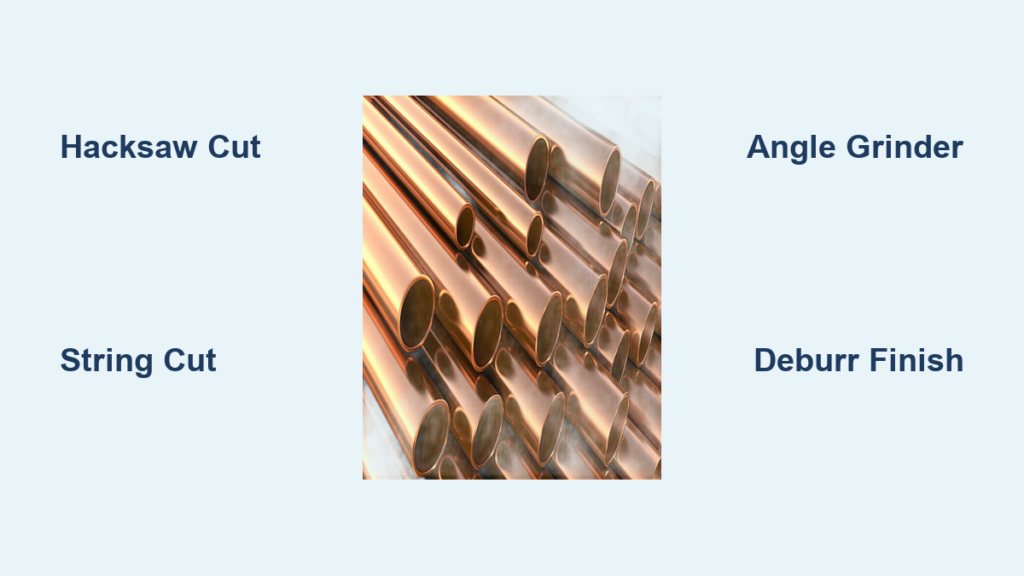
Your plumbing project grinds to a halt when you realize you need to trim copper tubing but don’t have a pipe cutter. Before you abandon your DIY repair or waste time driving to the hardware store, know this: you can achieve professional-quality cuts with tools already in your garage or workshop. Whether you’re installing a refrigerator water line, repairing an HVAC system, or tackling a plumbing emergency, these field-tested techniques will get you back on track without specialized equipment.
Cutting copper tubing without a pipe cutter might sound challenging, but with the right approach, you’ll create clean, square cuts that seal perfectly with compression fittings or solder joints. This guide reveals five reliable methods—from basic hacksaw techniques to precision angle grinder cuts—each with specific applications based on your tubing type and available tools. You’ll learn exactly how to avoid common mistakes that cause leaks, how to properly finish your cut for leak-free connections, and which method delivers the cleanest results for your specific situation.
Hacksaw Method for Professional-Quality Copper Cuts
Essential Tools for Perfect Hacksaw Results
You’ll need a fine-tooth hacksaw (24-32 teeth per inch), measuring tape, permanent marker, sturdy vise or clamps, and a metal file or 220-grit sandpaper. The fine-tooth blade is critical—coarse blades tear copper rather than cutting cleanly, creating jagged edges that cause fitting problems later.
Step-by-Step Hacksaw Cutting Process
Mark your cut line with a permanent marker after measuring twice to ensure accuracy. Secure the tubing in a vise with 2-3 inches extending beyond the jaws to prevent vibration during cutting. Begin with gentle pressure to create a shallow guiding groove, then maintain steady, full strokes while keeping the saw perfectly perpendicular to the tubing. Reduce pressure as you approach completion to prevent tube collapse from the final cut.
Pro tip: Wrap masking tape around your cut line before starting—this prevents the saw teeth from skipping across the smooth copper surface and keeps your mark visible throughout the cutting process. For perfect 90-degree angles, use a miter box if available, especially when cutting multiple identical lengths.
String Cutting Technique for Soft Copper Refrigeration Lines
When String Cutting Works Best
This surprisingly effective method shines with soft copper refrigeration lines between 1/4″ and 3/8″ diameter. You’ll need cotton string or paracord—synthetic ropes melt rather than cut through copper. This technique requires patience but produces remarkably clean cuts on thin-walled tubing when power tools aren’t an option.
String Cutting Execution Steps
Mark your cut location clearly around the tubing’s entire circumference using a permanent marker. Wrap cotton string tightly around the line 3-4 times, positioning it directly on your mark. Pull the string back and forth while maintaining firm tension against the copper surface. Continue this sawing motion, rotating the tubing 90 degrees every 30 seconds, until the string cuts completely through.
Warning: This method becomes significantly more difficult with hard-drawn copper water lines or tubing larger than 1/2″ diameter. Expect to spend 3-5 minutes per cut on standard refrigeration lines, and always deburr thoroughly afterward as string cutting creates more internal burrs than other methods.
Angle Grinder Precision Cuts for Hard Copper Lines
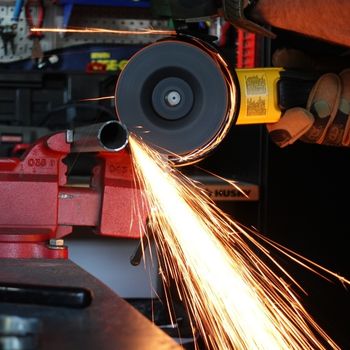
Critical Safety Upgrades for Angle Grinder Use
Angle grinders demand serious safety precautions beyond basic gear. Wear a full face shield instead of just safety glasses, use ear protection (these tools operate at 10,000+ RPM), and position your tubing horizontally in a vise—never attempt to hold it by hand. Thin cutting discs (1mm or less) can shatter under pressure, so keep your body positioned to the side of the disc’s rotation path.
Controlled Copper Cutting Technique
Mark your cut line completely around the tubing circumference with a fine-tip marker. Position your angle grinder at exactly 90 degrees to the tubing. Make a shallow scoring pass around the entire circumference before deepening the cut. Use multiple light passes rather than forcing through in one go—this prevents excessive heat that can anneal the copper and create micro-fractures. Allow the tubing to cool between passes, especially on larger diameters.
Time estimate: A skilled user can cut 1/2″ hard copper in under 30 seconds with an angle grinder, but beginners should allow 60-90 seconds to maintain control and prevent mistakes.
Dremel Micro-Cutting for Detailed Copper Work
Optimal Tool Configuration for Small Tubing
Install a fiberglass-reinforced cut-off wheel designed for metal cutting—standard wheels shatter dangerously on copper. Use your Dremel’s lowest effective speed setting (around 5,000-10,000 RPM); higher speeds create excessive heat and reduce control. Small clamps or a miniature vise work better than full-sized tools for securing small copper tubing sections without crushing them.
Precision Cutting Technique
Mark your cut with a fine-tip marker for maximum accuracy. Secure the tubing in your small vise with the cut line clearly visible. Score the copper lightly first to establish your cutting path, then progress through the wall thickness using multiple shallow passes. Rotate the tubing 90 degrees after each pass to maintain an even cut. Replace cut-off wheels after 2-3 cuts—a dull wheel shatters easily and creates poor cuts.
Pro tip: For tubing under 1/4″ diameter, wrap electrical tape around the cut area to prevent the Dremel wheel from catching and spinning the tubing during cutting.
Cold Chisel Emergency Method for Power Tool-Free Cuts

Controlled Chiseling Process for Clean Separation
This method works when no power tools or saws are available. Mark your cut line clearly around the tubing circumference. Secure the copper in a vise with the cut line just above the jaws. Use light hammer taps to score the line with a sharp 1/2″ cold chisel. Rotate the tubing 90 degrees after each series of strikes, deepening the score gradually until separation occurs.
Critical technique: Use consistent hammer force throughout—varying pressure creates uneven cuts. Heavy strikes deform the tubing; too-light taps won’t penetrate the copper wall effectively. Expect 15-25 hammer taps per rotation for standard 1/2″ refrigeration line.
Professional Deburring Process for Leak-Free Connections
Essential External and Internal Cleaning Steps
External burrs prevent proper fitting insertion and damage O-rings. Use a round file in smooth, rotating motions to remove all sharp edges from the cut end. Follow with 220-grit sandpaper for a smooth finish. Internal burrs restrict water flow and cause fitting failures—use a cone-shaped deburring tool or appropriately sized drill bit to remove them.
Visual cue: Hold the cut end up to light to check for internal burrs—any shadow around the interior edge indicates remaining burrs that need removal. Clean the tubing interior with compressed air to eliminate copper shavings that could clog valves or fixtures.
Tool Selection Guide by Copper Tubing Type
Matching Method to Your Specific Tubing
Soft copper refrigeration lines (1/4″-3/8″) respond best to hacksaw cutting with fine blades. Avoid power tools that generate excessive heat and may anneal the copper. The string method works exceptionally well for these smaller diameters when precision isn’t critical.
Hard copper water lines (1/2″-1″) demand more aggressive cutting methods. Angle grinders with thin cutting discs provide the best combination of speed and precision. Hacksaws require significant effort for these thicker walls—expect 2-3 minutes per cut with proper technique.
Flexible copper tubing requires special handling—avoid power tools entirely as vibration can create micro-fractures. For small diameter flexible lines, a sharp utility knife with careful scoring works acceptably, followed by gentle bending to complete the separation.
Quality Control Checklist Before Installation
Verifying Your Cut Meets Professional Standards
Test your cut against a flat surface—any gap indicates an angled cut that won’t seal properly with compression fittings. Use a combination square to verify 90-degree angles, especially critical for sweat connections where even slight angles cause fitting problems.
Check for roundness using the male fitting you plan to install. Oval-shaped tubing results from excessive pressure during cutting or inadequate support. If deformation occurred, cut again using more support near the cut line—better to waste a few inches of tubing than deal with leaks later.
Blow compressed air through the tubing to verify no internal restrictions exist. Any remaining burrs or copper fragments will create flow restrictions or damage downstream components like ice maker valves or pressure regulators.
Master these techniques and you’ll never be stopped by a missing pipe cutter again. Each method offers specific advantages: hacksaws for universal availability and clean cuts, string cutting for soft copper precision without power tools, angle grinders for speed on hard copper, Dremels for detailed work in tight spaces, and chisels for true emergency situations. Choose your approach based on your tubing type, available tools, and required precision level—then finish with proper deburring for leak-free connections every time. With practice, you’ll achieve cuts indistinguishable from those made with professional pipe cutters, saving both time and money on your plumbing projects.