The cutter has become baseball’s most feared pitch, with Cleveland’s Emmanuel Clase throwing a 100 MPH version that baffles even the best hitters. But before you can throw a devastating cutter, you need to master the fundamental skill that makes it work: how to hold a cutter properly. Unlike sliders or curveballs that require dramatic wrist action, the cutter’s magic happens in your grip—specifically where your fingers connect with the seams. If your cutter isn’t moving or you’re losing velocity, the problem almost always starts with your grip technique.
This guide reveals the exact finger placements, pressure points, and hand positions used by elite pitchers to create that late glove-side break. You’ll discover why the standard four-seam grip won’t work, how to identify which grip variation matches your hand size, and the subtle pressure adjustments that transform your fastball into a late-breaking weapon. Whether you’re a high school pitcher looking to add a new pitch or a college player trying to refine your existing cutter, these techniques will help you develop consistent movement without sacrificing velocity.
Perfect Finger Placement for Standard Cutter Grip
Your index and middle fingers must sit slightly off-center toward your pinky side on the baseball’s top surface. Unlike your four-seam fastball where fingers rest directly behind the ball’s center, this offset positioning creates the spin axis needed for glove-side movement. Position your fingertips directly on the seams rather than between them—this provides the necessary friction to generate sidespin while maintaining backspin.
Your thumb anchors underneath the ball, either directly beneath your index finger or slightly off-center toward your pinky side. This creates a stable pressure triangle between your thumb, index, and middle fingers that controls the ball through release. Meanwhile, your ring finger rests lightly on the side for additional stability while your pinky stays completely off the ball—this allows proper wrist rotation without interference.
Why Finger Position Determines Movement Direction
The precise location of your fingers on the ball directly controls whether your cutter moves toward your glove side or hangs like a batting practice fastball. When your fingers sit too close to the ball’s center, you’ll generate mostly backspin with minimal horizontal break. Position them too far toward your pinky side, and you’ll create excessive sidespin that turns your cutter into a slider. The sweet spot exists where your fingers are offset enough to create 3-5 inches of glove-side movement while maintaining positive vertical break.
Critical Visual Cues for Proper Placement
As you grip the ball, look for these visual indicators that confirm correct finger positioning:
– Your middle finger should rest slightly closer to your palm than your index finger
– Both finger pads make contact with the raised seam ridges
– The ball appears slightly tilted toward your thumb side
– Your knuckles remain relaxed (not white from over-gripping)
Three Professional-Tested Grip Variations

CT1: Traditional Seam Grip (80% Success Rate Among Pitchers)
This standard cutter grip dominates professional baseball because it delivers the most consistent movement patterns. Place both fingers directly on the seams with your middle finger slightly closer to your palm than your index finger. The raised seam ridges provide extra friction, helping you generate the necessary sidespin without over-gripping.
The key advantage is repeatability—the seam ridges act as natural reference points, making it easier to find consistent finger placement every time. This grip works especially well for pitchers with larger hands who can comfortably span the baseball’s circumference while maintaining proper pressure points.
CT2: Between-Seam Placement for Velocity Boost
For pitchers struggling with the traditional grip, placing fingers between the seams offers a viable alternative. Use a two-seam ball orientation (where the seams form a horseshoe shape) and position your fingers in the smooth leather between the seams. This grip reduces friction during release, potentially adding 1-2 MPH to your cutter while maintaining movement.
This variation works best when you maintain the same off-center positioning but allow the ball to roll slightly more freely off your fingers. Pitchers with smaller hands often find this grip more comfortable while still achieving the 3-5 inches of glove-side movement needed for effectiveness.
CT3: Modified Horseshoe Grip for Elite Velocity
This advanced variation positions your fingers higher up the ball, closer to the horseshoe seam. While it typically generates slightly less horizontal movement than CT1 (about 2-3 inches instead of 3-5), it can add 2-3 MPH to your cutter velocity. Use this grip strategically when facing power hitters who struggle more with velocity than movement.
The trade-off is reduced movement, so reserve this grip for specific counts or situations where velocity deception matters more than late break. Elite pitchers like Emmanuel Clase occasionally use this variation to keep hitters off-balance when they’ve recognized the standard cutter movement.
Finger Pressure Secrets Most Pitchers Miss
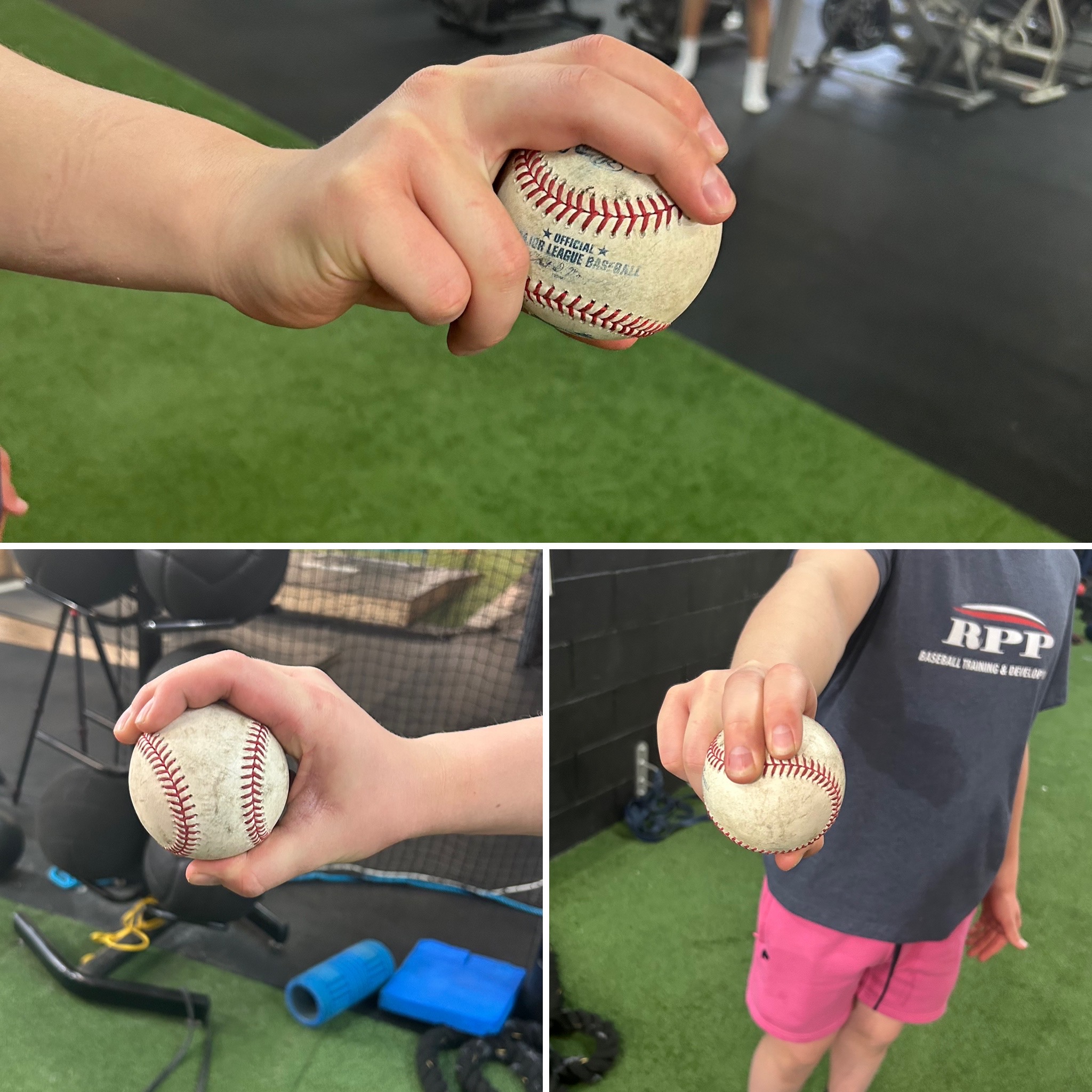
The difference between a mediocre cutter and a devastating one comes down to middle finger pressure dominance. As you begin your throwing motion, focus on driving your middle finger through the ball while maintaining your normal fastball mechanics. This pressure differential—more force from your middle finger than your index finger—tilts the spin axis and creates the glove-side break.
Think of it like throwing a football spiral where one finger applies more pressure than the others. Your middle finger becomes the last point of contact, dragging slightly across the ball’s side at release. This creates the necessary gyro spin component while maintaining the fastball’s backspin—resulting in the signature late movement that makes hitters swing over the top.
Warning Signs of Incorrect Pressure Application
If your cutter isn’t moving properly, check for these pressure-related issues:
– Equal finger pressure: Creates mostly backspin with minimal horizontal movement
– Excessive thumb pressure: Causes the ball to drop instead of cutting
– Ring finger interference: Disrupts the pressure triangle, reducing movement consistency
– Tense knuckles: Indicates over-gripping that limits natural wrist rotation
Hand Position and Release Mechanics That Create Late Break
Your wrist angle at release determines whether your cutter has sharp, late movement or hangs like batting practice. As you approach release, think “palm facing first base” (for right-handed pitchers) or “palm facing third base” (for left-handed pitchers). This subtle wrist tilt helps create the necessary spin axis without telegraphing the pitch to hitters.
Keep your wrist firm and stable throughout the motion. Unlike a slider, the cutter isn’t a breaking ball—you shouldn’t actively snap your wrist or try to create additional spin. Instead, let the grip and finger pressure do the work while maintaining your natural fastball mechanics. The last contact point should be the bottom right quadrant of the baseball (for right-handed pitchers), allowing the ball to “shoot” out of your hand with the proper spin.
Common Grip Mistakes That Sabotage Your Cutter
Over-Gripping the Baseball
Many pitchers unknowingly sabotage their cutter by gripping too tightly, which creates forearm tension that reduces both velocity and movement. Your grip should feel firm but relaxed, with most pressure concentrated in the thumb-middle finger triangle. If your knuckles turn white during the grip, you’re applying too much force—this restricts natural wrist rotation needed for proper release.
Incorrect Finger Spacing
Fingers positioned too far apart reduce the necessary friction and spin efficiency. Your index and middle fingers should touch each other, creating a unified pressure point that maximizes spin transfer. Separating them by even a small gap dramatically decreases movement consistency and makes the pitch harder to control.
Thumb Position Errors
Your thumb placement directly affects vertical movement. If positioned too far toward the index finger side, you’ll generate excessive downward movement, making your cutter look like a weak slider. Keep your thumb centered or slightly toward your pinky side to maintain the positive vertical break (+10 inches) that keeps the pitch in the upper quadrant of the movement chart.
Testing Protocol to Validate Your Grip

Start by throwing 10-15 pitches with each grip variation while using a Rapsodo or Trackman unit to measure key metrics:
- Spin efficiency: Target 35-40% (below 35% indicates slider characteristics)
- Horizontal break: 3-5 inches toward your glove side
- Vertical break: Maintain positive numbers (shouldn’t drop below zero)
- Velocity differential: 3-6 MPH slower than your four-seam fastball
If your data shows negative vertical break or spin efficiency below 35%, adjust your finger pressure or try a different grip variation. The goal is consistent movement patterns that maintain positive vertical break while generating reliable glove-side movement.
Practice Progression to Master Your Cutter Grip
Begin your development with flat-ground throwing at 50-60% intensity, focusing solely on consistent grip placement and smooth delivery. Throw 20-25 pitches daily for the first week, concentrating on the middle finger pressure cue without worrying about velocity or location.
Progress to bullpen sessions at 70-80% intensity, incorporating your cutter into fastball sequences. Start with 5-8 cutters per 20-pitch session, gradually increasing volume as comfort develops. Track every pitch’s movement pattern and adjust grip pressure as needed.
Advanced progression involves tunneling your cutter with four-seam fastballs. The identical release point and similar initial trajectory create late deception—hitters see fastball out of your hand but get cutter movement at the plate. This requires consistent grip mechanics that allow you to repeat your release point with both pitches.
Maintenance and Consistency Tips for Long-Term Success
Your cutter grip will evolve as you throw more pitches, so monitor seam wear patterns on your baseballs—consistent wear marks indicate repeatable finger placement. If wear patterns vary significantly between balls, you’re likely adjusting your grip unconsciously during delivery.
Develop a pre-pitch routine that includes checking your finger placement on the seams. Many elite pitchers use a subtle finger-tracing motion before gripping the ball, ensuring they find the exact same position every time. This routine becomes muscle memory, allowing you to focus on location rather than grip mechanics during games.
Remember: the cutter’s effectiveness comes from late, subtle movement rather than dramatic break. Master these grip fundamentals first, then let your natural arm speed and mechanics do the rest. With consistent practice using these techniques, you’ll develop a cutter that keeps hitters guessing and gives you a reliable weapon in any count situation.