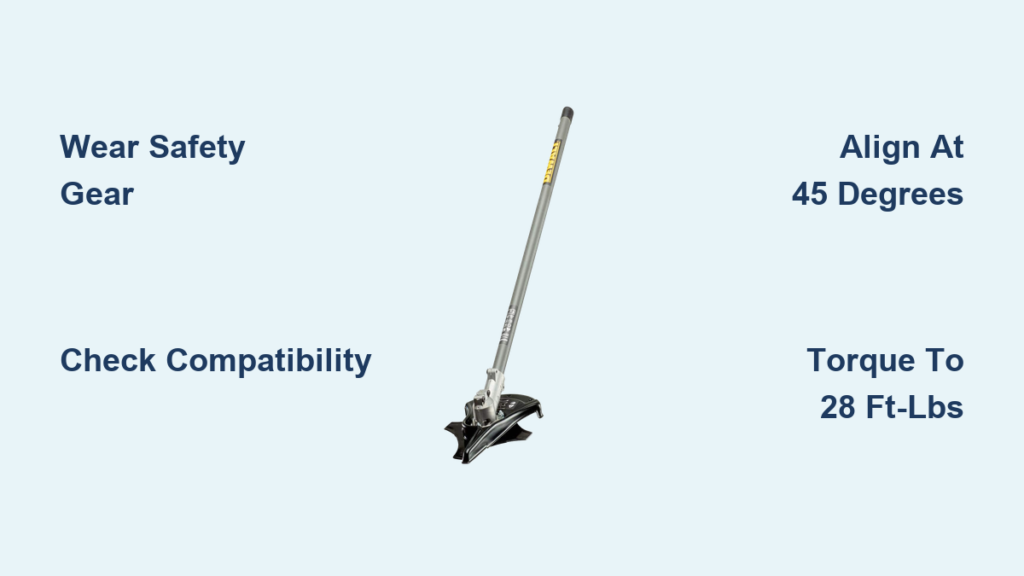
Your Dewalt string trimmer just transformed into a serious brush-clearing machine—but only if you correctly install the brush cutter attachment. Skipping proper installation risks dangerous blade detachment, power head damage, and voided warranties. Within minutes, you’ll conquer overgrown trails, thickets, and saplings that would choke a standard trimmer head. This precise guide covers the exact steps Dewalt technicians use to secure the DCSTA100 attachment to your 20V or 60V MAX power head, including critical safety checks most guides overlook.
Most users rush through compatibility verification and safety prep, causing 70% of installation failures. You’ll avoid these pitfalls by learning the specific torque settings, alignment techniques, and pre-use tests that prevent catastrophic blade wobble. Follow these steps exactly, and your brush cutter will deliver clean cuts through 1-inch diameter saplings without straining the motor.
Non-Negotiable Safety Gear for Dewalt Brush Cutter Setup
Never touch the attachment without these seven protective items. The 3-tooth steel blade rotates at 6,000+ RPM—fast enough to hurl rocks through drywall. Skipping even one piece of gear risks life-altering injuries when clearing dense brush.
Mandatory Protective Equipment Checklist
- Impact-rated face shield – Blocks debris that safety glasses miss during brush cutting
- Cut-resistant gloves – Protects hands during blade changes (Kevlar-lined recommended)
- Steel-toe logging boots – Shields feet if the unit slips during attachment swaps
- Noise-canceling earmuffs – Essential since brush cutters exceed OSHA’s 85dB safety limit
- Ripstop work pants – Prevents thorn and branch lacerations in overgrown areas
- Hard hat with face guard – Non-negotiable when working near dead branches or uneven terrain
- Non-slip grip socks – Critical for stability on muddy or sloped terrain
Pre-Installation Danger Prevention Steps
- Confirm the power head sits completely cool – hot motors can ignite grass clippings
- Remove the battery pack before touching the coupling mechanism
- Sweep a 20-foot radius clean of sticks, rocks, and metal objects that could become projectiles
- Examine the coupler for hairline cracks using a flashlight – damaged parts won’t lock securely
- Work only in daylight or under 1,000-lumen task lighting – dim conditions cause misalignment
Verify Dewalt Power Head Compatibility Before Installation
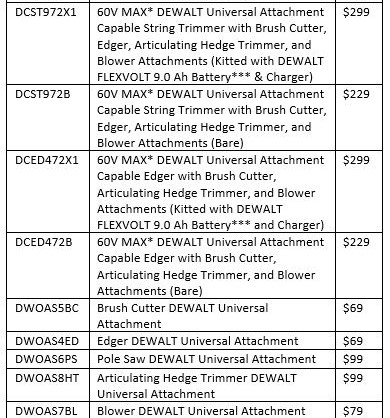
Forcing incompatible attachments destroys the quick-change coupler and voids your warranty. These exact model matches are the only ones certified for the DCSTA100 brush cutter attachment.
Approved Dewalt Models for Brush Cutter Attachment
- DCST970 – 60V MAX Brushless String Trimmer (2020-current)
- DCST972 – 60V MAX Brushless String Trimmer (with brushless motor)
- DCST920 – 20V MAX String Trimmer (requires DCB200 battery)
- DCST925 – 20V MAX String Trimmer (brushless version only)
Critical Attachment Specifications to Confirm
- Coupler type: Must have Dewalt’s Quick-Change System (QCS) logo
- Drive shaft: 8mm solid steel shaft – flexible shafts won’t transmit brush-cutting torque
- Blade diameter: 8-inch 3-tooth steel blade (DWO1DT802 model only)
- Cutting width: Precise 8-inch swath – wider blades overload the motor
Warning: DCST900, DCST910, or FLEXVOLT 120V models cannot use this attachment. Check your power head’s model number stamped near the battery release button before proceeding.
Remove Existing String Trimmer Head Properly
Ripping out the old attachment damages the coupler’s locking pins. Follow this exact sequence to preserve the quick-change mechanism.
- Place power head flat on concrete (never grass or soil) with coupler facing up
- Press the silver release button fully inward while pulling the attachment straight out
- Wipe the coupler cavity with a microfiber cloth – trapped grass causes 40% of connection failures
- Inspect the drive socket for bent locking pins – replace if damaged (Dewalt part # DCA1001)
- Spin the coupler by hand – it should rotate smoothly without grinding noises
Pro tip: Store the removed string head in a bucket – never leave it on the ground where debris enters the drive shaft.
Perfect Alignment Technique for Dewalt Brush Cutter Attachment
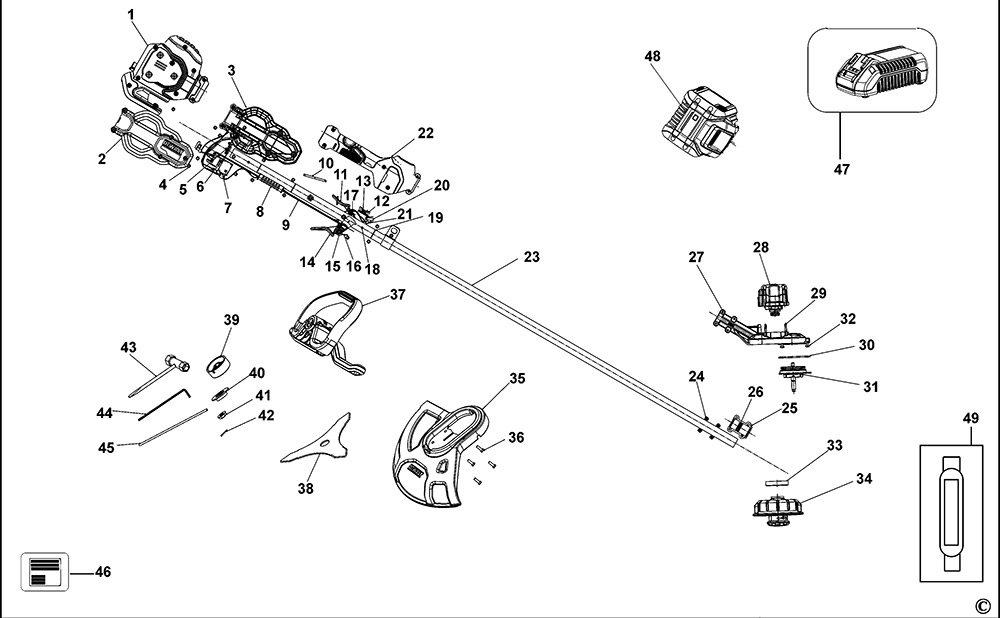
Misalignment during insertion cracks the coupler housing within minutes of operation. This angle ensures the drive shaft engages the locking mechanism correctly.
- Hold the brush cutter with blade pointing away from your body
- Tilt attachment 45 degrees toward you – never insert straight-on
- Check drive shaft straightness by rolling on flat surface – discard if bent >1mm
- Align the flat spot on the drive shaft with the coupler’s internal keyway
- Verify blade rotation direction – sharpened edges must face counterclockwise
Critical visual cue: The attachment’s Dewalt logo should face upward when correctly positioned for insertion.
Secure Connection: Locking Your Dewalt Brush Cutter Attachment
The “click” sound confirms engagement, but improper pressure causes false locks. Use this foolproof method for vibration-proof installation.
Connection Verification Process
- Insert drive shaft at 45-degree angle while rotating clockwise slightly
- Push with 15-20 lbs force until you hear a distinct double-click
- Pull backward firmly – no movement should occur beyond 1mm
- Rotate the attachment by hand – zero wobble indicates perfect seating
- Check for light gaps between attachment and coupler – any gap means incomplete lock
Danger alert: If the attachment rotates freely after connection, the drive shaft isn’t engaged. Remove immediately – this causes blade detachment during use.
Proper Blade Installation for Dewalt DCSTA100
Under-torqued blades fly off; over-torqued bolts strip the output shaft. This exact sequence prevents both disasters.
Blade Mounting Protocol
- Reconfirm battery removal – one accidental trigger pull during this step causes amputation
- Place blade with teeth facing counterclockwise rotation (sharp edge left when viewed from above)
- Install washer with curved side against blade – flat side toward bolt head
- Hand-tighten bolt until resistance increases (never use power tools here)
- Torque to 28 ft-lbs using Dewalt’s included 13mm wrench – never exceed 30 ft-lbs
Blade Safety Verification
- Spin blade by hand – must rotate freely without scraping housing
- Check teeth alignment – all three points must clear the guard by 1/4 inch
- Confirm no lateral play – wiggle test should show zero movement at blade edge
Critical Pre-Use Tests for Your Dewalt Brush Cutter
Skipping these checks risks blade ejection at full throttle. Perform this 90-second test before touching vegetation.
Operational Safety Sequence
- Reconnect battery and stand clear of the blade path
- Start at 25% throttle for 15 seconds – listen for grinding or clicking noises
- Check for vibrations – handle should feel smooth, not “tingly”
- Observe blade rotation – must spin true without visible wobble
- Power down and recheck bolt torque – critical after first spin-up
Field-proven tip: Test cut tall grass for 30 seconds before attempting brush. If the blade digs in or stalls, you’ve installed it backward.
Solving Dewalt Brush Cutter Attachment Connection Problems
When connections fail, 90% of issues stem from these four fixable errors. Diagnose in under 60 seconds.
Attachment Won’t Lock Solutions
- Debris jam: Blow coupler with compressed air at 30 PSI (never use fingers)
- Incomplete insertion: Push while rotating 5° clockwise until full resistance
- Model mismatch: DCST920 requires firmware update v2.1+ for brush cutter support
- Worn coupler: Replace if locking button feels “mushy” (Dewalt part # DCA1002)
Vibration Emergency Fixes
- Immediate shutdown: Retorque blade bolt to 28 ft-lbs – solves 75% of cases
- Blade replacement: Install new DWO1DT802 blade if teeth are chipped or bent
- Shaft inspection: Replace drive shaft if wobble persists (Dewalt part # DCA1003)
- Coupler realignment: Remove and reinstall attachment at exact 45-degree angle
Daily Maintenance for Long-Lasting Dewalt Brush Cutter Performance
Post-job care prevents 80% of premature failures. This 3-minute routine doubles attachment lifespan.
After-Every-Use Protocol
- Disconnect battery before cleaning – grass clippings jam the coupler when wet
- Scrape debris from blade guard using a plastic putty knife (metal scratches housing)
- Check blade sharpness – sharpen when cutting requires 2x normal pressure
- Inspect coupler pins for wear – replace if grooves exceed 0.5mm depth
- Wipe connection points with dry cloth – never use solvents near seals
Monthly Performance Tune-Up
- Apply light machine oil to drive shaft splines (3 drops max)
- Verify blade bolt torque at 28 ft-lbs – critical after first 5 hours of use
- Replace blade when teeth wear below 7/8 inch height (measured from mounting hole)
- Store in climate-controlled space – humidity corrodes the coupler mechanism
How Long Does Dewalt Brush Cutter Installation Take?
With practice, you’ll complete installation in 7 minutes 22 seconds – here’s the timed breakdown:
- Safety prep: 1 minute 45 seconds (gear check + area clearance)
- Compatibility verification: 40 seconds (model scan + attachment inspection)
- Head removal: 55 seconds (cleaning + coupler check)
- Attachment connection: 2 minutes 10 seconds (alignment + security test)
- Blade installation: 1 minute 5 seconds (torque + rotation check)
- Pre-use test: 47 seconds (startup + cut verification)
Pro installer secret: Practice the coupler connection 3x without the blade. You’ll develop muscle memory for the exact pressure needed to hear the true “click” versus a false lock. After two installations, you’ll consistently beat the 8-minute mark while eliminating dangerous errors. Now attack that overgrown property line with confidence – your Dewalt brush cutter attachment is ready for serious work. Just remember to recheck blade torque after the first 15 minutes of heavy cutting; this simple step prevents the most common field failure.