Frustrated by uneven cuts, excessive tractor strain, or premature blade wear? Your rotary cutter setup is likely the culprit—not mechanical failure. Learning how to set up a rotary cutter properly transforms this brute-force implement from a scalp-inducing hazard into a precision tool that delivers clean cuts while protecting your equipment. Most operators make critical errors before even engaging the PTO, like attempting adjustments on grass instead of pavement or running the deck level. These mistakes force your tractor to work harder, create dangerous operating conditions, and slash component lifespan.
The difference between a correctly configured rotary cutter and a poorly adjusted one isn’t subtle. Proper setup delivers dramatically cleaner cuts through tall grass and weeds while reducing power demands by up to 30%. More importantly, it prevents catastrophic events like scalping on uneven terrain or sudden deck impacts that bend spindles. This guide cuts through common misconceptions to deliver field-tested adjustments you can complete in under 15 minutes. You’ll learn why minimum 3-inch height isn’t optional, how front deck tilt affects recutting, and the critical pavement requirement most operators ignore.
Park on Pavement: Why Level Ground Prevents False Setup Readings
Never attempt rotary cutter adjustments on grass, gravel, or sloped terrain. Soft surfaces compress unevenly under the deck’s weight, creating false height measurements that guarantee poor performance. Pavement provides the rigid, level foundation required for accurate setup—this isn’t a recommendation but a non-negotiable requirement. Position your tractor with all four wheels firmly on concrete or asphalt before beginning any adjustments.
Shut Down Engine Before Blade Measurements
Always disengage the PTO and shut off the tractor engine before checking blade heights or deck angles. Rotating blades can suck in loose clothing or tools within milliseconds, and residual PTO rotation creates deadly hazards. Verify the power take-off shaft has completely stopped moving before reaching near the deck. This safety step alone prevents dozens of serious injuries annually according to equipment safety reports.
Why Grass Surfaces Guarantee Incorrect Setup
When parked on turf, the rear gauge wheel sinks deeper than the front deck edge due to uneven weight distribution. This creates a false level reading where the front appears higher than reality. On your next mowing pass, the deck slams into dips instead of floating smoothly, causing scalping and violent vibrations. Pavement eliminates this variable, showing your cutter’s true geometry.
Set Minimum 3-Inch Cutting Height to Avoid Scalping and Blade Damage

Running your rotary cutter below 3 inches isn’t just ineffective—it’s destructive. Unlike finish mowers with floating decks, rotary cutters lack the geometry to follow ground contours. At lower heights, the rigid deck inevitably scalps high spots while the blades strike hidden rocks or roots. This causes immediate damage like bent blades and worn spindle bearings, plus long-term strain on your tractor’s PTO shaft.
Adjust Rear Gauge Wheel to Exact 3-Inch Baseline
Start by setting your rear gauge wheel using one of three common methods:
– Slide adjustment: Loosen the lock bolt, slide the wheel assembly up/down the bracket, then retighten
– Hole pattern: Move the pin through pre-drilled holes in the mounting bracket (lower holes = higher cut)
– Bushing stack: Add or remove bushings above/below the collar (more below = higher cut)
Measure precisely from pavement to the blade’s cutting edge at the rear. Your tape measure must show exactly 3 inches—no “close enough.” This isn’t a suggestion; it’s the absolute minimum height where the deck clears typical terrain variations without constant contact.
Match Front Height Using 3-Point Hitch Control
With the rear locked at 3 inches, slowly lower the 3-point hitch until the front blade edge also measures 3 inches above pavement. This creates your initial neutral position before applying the critical forward tilt. Never adjust front height using gauge wheels—that’s their rear-only function. Small hitch movements make big differences; lower the hitch in quarter-inch increments while remeasuring.
Tilt Front 1/4 Inch Lower for Cleaner Cuts on 4-6 Foot Cutters

A level deck is the #1 cause of poor rotary cutter performance. Without front tilt, the blade’s rear section drags through already-cut vegetation, creating a muddy mess while doubling power demands. For standard 4-6 foot cutters, the front cutting edge must run ¼ to ½ inch lower than the rear. This slight forward pitch lets the blade slice cleanly at the front while allowing cut material to exit smoothly behind.
Measure Front Tilt Without Special Tools
After setting both ends at 3 inches, raise the 3-point hitch control 1 inch. Now remeasure:
– Rear blade edge should still read 3 inches (held by gauge wheel)
– Front blade edge should now read 2½-2¾ inches
If front height doesn’t drop ¼-½ inch, adjust the hitch control upward until it does. This creates the necessary operational tilt while maintaining 3-inch minimum clearance.
Preserve Your Perfect Setting with Field Hacks
Most tractors lack precise height indicators, so mark your ideal setting:
– Wrap colored tape around the hitch control lever
– Scratch a small line on the control housing with a pocket knife
– Place a zip tie at the correct position on the lift arm
This saves 5+ minutes per use versus readjusting from scratch. Always recheck tilt after hitting major obstacles, as impacts can shift hitch positions.
Tighten Sway Bars to Stop Mower Wandering When Backing Up
Loose sway chains turn your rotary cutter into a dangerous pendulum. Excessive side-to-side play causes the deck to swing violently during turns or when reversing, risking collisions with fences, trees, or your tractor’s tires. Proper tension ensures the cutter tracks directly behind your tractor like a trailer—not swaying independently.
Achieve “Firm but Flexible” Chain Tension
Adjust sway bars until you can barely move the deck side-to-side with gloved hands. The chains should have zero slack when stationary but allow slight movement during sharp turns. Test by backing up slowly in a straight line—the deck should follow perfectly without fishtailing. Over-tightening strains hitch pins and prevents necessary side flex over uneven terrain.
Adjust Upper Link for 12+ Inch Deck Flex Over Bumps
Your rotary cutter must pivot vertically to absorb terrain changes. Without this freedom, hitting a depression forces the entire deck upward, yanking the PTO shaft violently. Conversely, climbing bumps without downward flex causes the rear to lift off the ground. The upper link length controls this critical movement range.
Test Flex by Raising 3-Point Hitch Fully
With the deck on pavement, raise the 3-point hitch to its highest position. The gauge wheel should:
1. Stay grounded during initial lift (first 6-8 inches)
2. Eventually lift 12+ inches off pavement at full extension
If the wheel lifts immediately, lengthen the upper link. If it never lifts, shorten it slightly. This ensures the deck floats over dips while still allowing full lift for transport.
Align Deck Parallel to Tractor Axle for Even Cutting
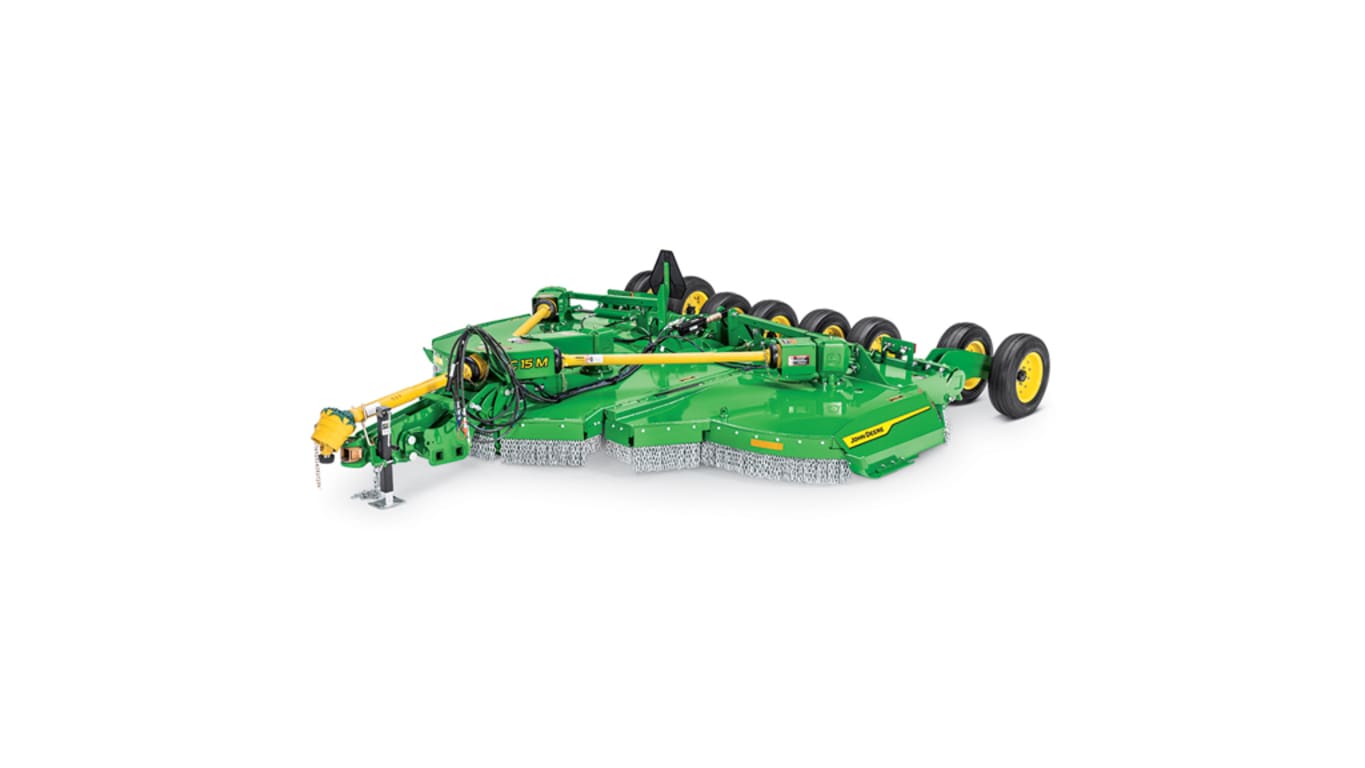
Side-to-side tilt creates uneven cuts and accelerates wear on one side of the deck. The entire cutter must run perfectly parallel to your tractor’s rear axle—not tilted toward the left or right. Even a 1-inch height difference between sides causes noticeable scalping on slopes.
Sight Alignment Like a Carpenter’s Level
Stand directly behind the cutter (PTO disengaged!) and sight over the deck toward your tractor’s rear axle. The top edge of the deck should form a straight line parallel to the axle. If the left side appears higher, shorten the left lower hitch arm by ¼ turn. Always recheck after adjustments—small changes have outsized effects.
5-Minute Pre-Use Rotary Cutter Setup Checklist
Verify these critical points before every mowing session:
– ✅ Minimum 3-inch height: Measure rear blade edge to pavement
– ✅ Front tilt confirmed: Front should be ¼-½ inch lower than rear
– ✅ Sway bars snug: Zero slack but slight side movement possible
– ✅ Vertical flex intact: Gauge wheel lifts 12+ inches at full hitch raise
– ✅ Deck perfectly level side-to-side: Parallel to tractor axle
Skip this checklist and you’ll pay in ruined cuts, bent components, and exhausted tractor performance. These 300 seconds save hours of repairs later.
How Proper Setup Cuts Power Use and Boosts Component Life
Investing 15 minutes in correct rotary cutter setup delivers measurable returns every time you mow. Operators consistently report 25-30% less tractor strain when the deck runs at 3-inch minimum height with proper front tilt. This reduced load translates directly to longer PTO shaft and gearbox life—common failure points under improper setup.
Cleaner cuts aren’t just cosmetic; they prevent grass from matting under the deck, eliminating the need for aggressive second passes that overheat blades. Most significantly, correct vertical flex prevents those jarring “thunk” impacts when the deck hits hidden depressions, which are the leading cause of bent spindles and cracked decks. Your tractor works smarter, not harder, while your cutter delivers professional results that last years longer.
Before your next mowing session, park on pavement and run through the 5-minute checklist. That seemingly minor ¼-inch front tilt adjustment? It’s the difference between a smooth, efficient cut and your tractor fighting for every inch. When terrain gets rough, your properly configured rotary cutter will float over dips instead of digging in—proving that setup isn’t preparation, it’s performance.