Nothing ruins a masonry project faster than poorly cut bricks that won’t fit properly. Whether you’re building a garden wall, installing a patio, or creating custom brick patterns, knowing how to use a brick cutter properly transforms rough materials into precision components. This guide delivers actionable techniques for all brick cutter types—manual, electric, and petrol-powered—so you achieve clean, accurate cuts safely and efficiently. By the end, you’ll know exactly how to select, set up, and operate each cutter type while avoiding common mistakes that waste time and materials.
Select the Right Brick Cutter for Your Project Size
Manual Cutters for DIY Projects Under 50 Bricks
Choose manual brick cutters when tackling small weekend projects like garden edging or minor repairs. These leverage-based tools feature a hardened steel blade that scores and snaps bricks cleanly without power requirements. Position your cutter on a stable surface 34-36 inches high to minimize back strain, then clamp it securely. For best results, always score the brick lightly first before applying full pressure—this creates a clean fracture line. Manual cutters excel for 20-50 cuts but become impractical for larger jobs due to physical effort required.
Electric Cutters for Patios and Medium-Scale Work

When cutting 100+ bricks for patios or retaining walls, electric diamond blade cutters become essential. These 1.5-5 HP machines with water-cooled systems suppress dust while extending blade life up to 100 times longer than dry cutting. Before starting, connect to a 12 AWG extension cord minimum and verify 0.5 GPM water flow reaches the blade. The integrated water system does double duty: cooling the diamond blade while capturing harmful silica dust. Electric cutters handle continuous operation with minimal vibration, making them ideal for contractors and serious DIYers.
Petrol Cutters for Large Construction Sites
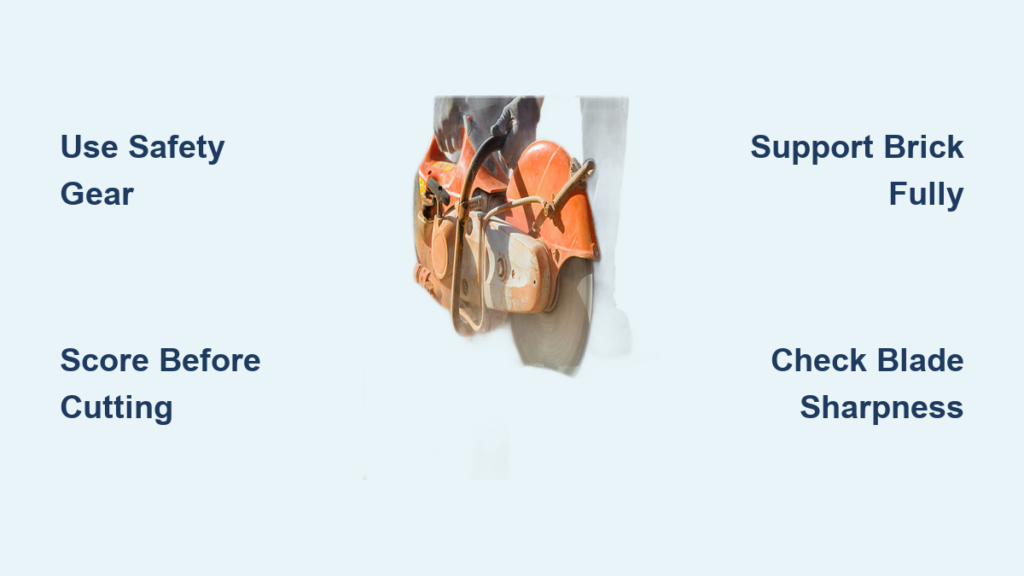
For cutting hundreds of bricks on remote job sites without power access, petrol-powered cutters deliver unmatched mobility. These rugged 3-13 HP machines run 4-6 hours on a single tank, featuring vibration dampening that reduces operator fatigue during extended use. Always mix 2-stroke fuel at a 50:1 ratio using fresh, high-octane gasoline for reliable starts. Petrol units handle the toughest materials—from reclaimed bricks to dense engineering blocks—but require more maintenance than electric models. Carry pre-mixed fuel in approved containers to avoid downtime.
Critical Safety Gear Required Before Cutting Bricks
Non-Negotiable Protective Equipment Checklist
Never operate a brick cutter without proper safety gear. Safety goggles with side shields prevent flying debris from causing permanent eye damage—regular glasses won’t suffice. Wear N95 respirators for occasional cuts, upgrading to P100 filters during extended sessions to block hazardous silica dust. Electric and petrol cutters produce 85-100 dB noise, making earmuffs with 25 dB reduction essential. Heavy-duty gloves protect against sharp edges, while steel-toed boots prevent crushing injuries from dropped bricks.
Pre-Cut Machine Safety Verification
Before powering up, perform these critical checks: Inspect the diamond blade for chips or missing segments that cause dangerous kickback. Verify all safety guards lock securely in place—never bypass these protections. Check electrical cords for frays on electric models. For wet cutters, confirm water flows within 30 seconds of activation to prevent dust exposure. Establish a 6-foot safety perimeter around your workspace free of obstacles and bystanders. Test emergency stops immediately after startup.
Prepare Bricks for Clean, Accurate Cuts Every Time
Select and Inspect Bricks Before Cutting
Examine each brick for visible cracks, chips, or manufacturing defects that cause unpredictable splitting during cutting. Reject any brick with structural flaws—they’ll waste your time and materials. Check moisture content by weighing a sample brick, drying it for 24 hours, then reweighing; optimal moisture for clean cuts is 4-6%. Inspect for surface irregularities like excess mortar that affect cutting accuracy. Consistent brick quality ensures uniform results across your project.
Precision Marking Methods for Perfect Alignment
Use steel measuring tapes (not fabric) for accuracy within 1/16 inch. Mark cut lines with wax pencils that create visible, non-smudging lines on brick surfaces. For critical cuts, mark both faces of the brick and connect the lines across edges to maintain alignment through the full thickness. Always add 1/8 inch to measurements to account for mortar joints. When making multiple identical cuts, create a wood template to speed the process while ensuring consistency.
Perfect Manual Brick Cutter Technique in 5 Steps
Step-by-Step Cutting Process
Place your brick face-up on the platform with the mark aligned under the blade. Apply light, steady pressure to create an initial score line across the surface—this guides the full cut. Gradually increase pressure using smooth motions as you near completion. Support both sides of the brick as the blade penetrates to prevent the waste piece from breaking off prematurely. Complete the cut with a firm, decisive motion. If the brick doesn’t separate cleanly, gently tap the waste side with a brick hammer.
Fix Common Manual Cutting Problems
Jagged edges? Replace the dull blade or sharpen it—worn blades tear rather than cut brick. Excessive effort required? Lubricate pivot points and verify blade alignment. Brick cracks during cutting? Check for internal flaws and provide full support under the entire brick. Inaccurate dimensions? Recalibrate your measurement guide and confirm blade alignment. Manual cutters demand proper technique—practice on scrap bricks before cutting project materials.
Operating Electric Brick Cutters: Wet Cutting Method

Essential Wet Cutting Technique
Activate water flow 30 seconds before cutting to ensure blade lubrication. Feed bricks into the blade at 1-2 inches per second using steady, consistent pressure. Let the diamond blade do the work—excessive force causes premature wear and poor cuts. After 5 minutes of continuous cutting, pause for 30 seconds to prevent overheating. Maintain consistent water flow throughout operation; reduced flow creates hazardous dust and shortens blade life significantly.
Advanced Electric Cutting Applications
Create precise bevel cuts by adjusting table angles from 0-45 degrees using digital displays. For plunge cuts, lower the blade gradually into the brick surface to achieve partial-depth cuts. Combine angle and depth adjustments for complex compound cuts. Always choose wet cutting for cleaner edges and 10x longer blade life; reserve dry cutting only when water creates safety hazards like electrical risks.
Field-Ready Petrol Cutter Operation for Job Sites
Starting Sequence and Field Adjustments
Close the choke for cold starts, prime the carburetor with 3-5 bulb pumps, then pull the starter cord smoothly. Allow 30-60 seconds warm-up at idle before opening the choke gradually. Monitor engine temperature during operation, taking cooling breaks every hour. On uneven terrain, stabilize the cutter with plywood platforms. In noise-sensitive areas, limit continuous operation to 2-hour blocks. Always wait for complete blade stop before relocating the cutter.
Create Angle Cuts, Curves, and Holes with Precision

Perfect Angle and Curve Techniques
Set angles digitally within 0.5-degree accuracy using built-in protractors. Mark cut lines on both brick faces to ensure alignment through the full thickness. For curved cuts, make a series of straight tangent cuts, then chip away excess material with a brick hammer. Use 3-4mm narrow diamond blades for intricate curves. Practice on scrap bricks to develop the nibbling technique needed for smooth curves.
Cutting Holes and Openings
Drill circular holes using diamond core bits in rotary hammer drills for 1-6 inch diameters. Create square holes by drilling corner holes, then chiseling out the center. Use tuck-pointing blades to cut through mortar joints for precise brick removal. Mark all hole locations from both brick faces to ensure alignment through the full thickness.
Keep Your Brick Cutter Running Smoothly: Daily Care
Essential Post-Use Maintenance
Clean cutting blades with wire brushes to remove accumulated brick dust. Tighten all visible bolts and fasteners using appropriate tools. Lubricate manual cutter pivot points with light machine oil. Drain water systems completely to prevent mineral deposits. Inspect power cords and connections for damage requiring immediate repair. Never store cutters with fuel in the tank for more than 30 days—drain petrol models completely.
Fix Jagged Cuts, Chipping, and Inaccuracy Issues
Solving Common Cutting Problems
Chipping results from dull blades, excessive pressure, or internal brick stresses. Replace blades showing worn diamond segments. Reduce feed pressure, allowing the blade to cut rather than force it through. Pre-inspect bricks for hairline cracks. Inaccurate cuts stem from worn measurement systems—recalibrate using known references. Provide full support under the entire brick length to prevent flexing that causes curved cuts.
Mastering how to use a brick cutter separates amateur masonry from professional results. Start with manual cutters for small projects, progress to electric units for patios, and use petrol models for large job sites. Always prioritize safety with proper PPE and machine checks—silica dust causes irreversible lung damage. Practice techniques on scrap bricks before cutting project materials, and maintain your cutter with daily cleaning and weekly servicing. With these skills, you’ll achieve clean, precise cuts that fit perfectly, saving time and materials on every project. Remember: the right technique with even a basic cutter produces better results than rushing with advanced equipment.