
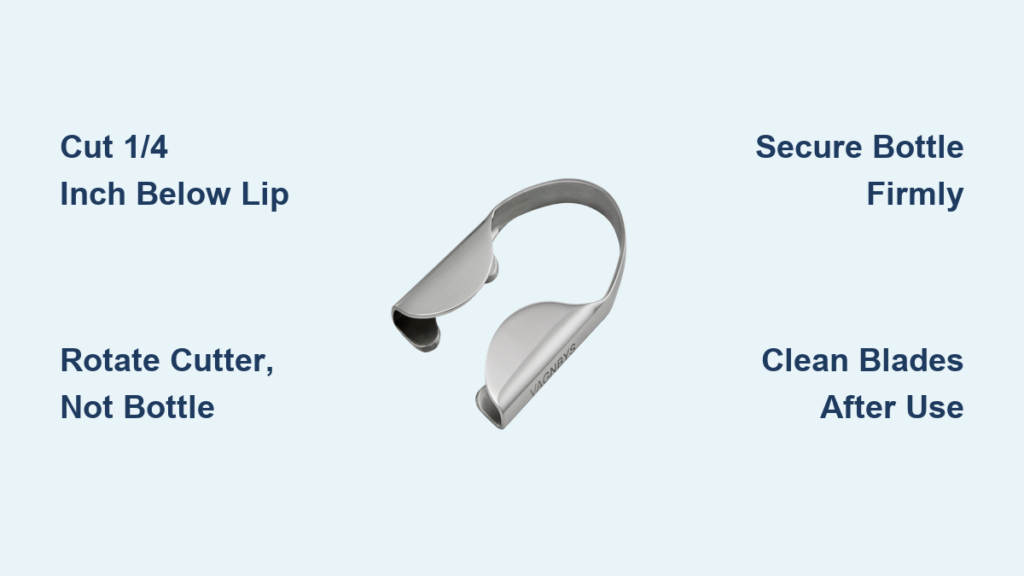
That jagged foil tearing across your wine bottle ruins the ritual before it begins. You shouldn’t need a knife or struggle with shredded metal while guests watch. A proper foil cutter transforms this moment from clumsy to elegant—but only if you know the sommelier’s cutting secrets. Master these techniques, and you’ll expose the cork cleanly in under 10 seconds while avoiding foil fragments in your vintage. You’ll learn exactly where to cut, how to prevent torn edges, and why your current method fails.
Skip the frustration of uneven slices that force you to rip off foil by hand. Whether you’re using a $5 wheel cutter or a $100 corkscrew with integrated blades, this guide reveals the precise pressure, positioning, and rotation pros use. No more guessing where to cut or why your foil spins instead of slicing. By the end, you’ll open bottles with the quiet confidence of a wine professional.
Select the Right Foil Cutter for Your Skill Level
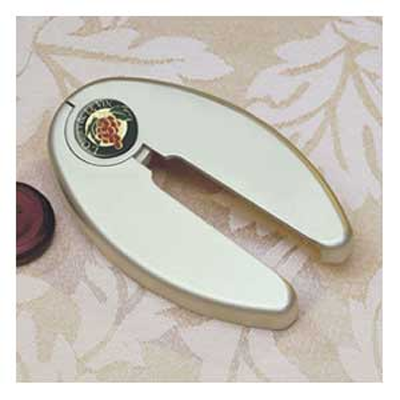
Why Wheel Cutters Beat Other Types for Beginners
Start with a two- or four-blade wheel cutter for foolproof results. These rotate around the bottle neck, slicing foil with even pressure as you turn the tool—not the bottle. Unlike knife-style cutters, they won’t slip toward your hand if you lose focus. The housing guides the blades precisely below the lip, eliminating guesswork.
Lever-Style Cutters: Hidden Pitfalls to Avoid
Many corkscrews fold out tiny blades when you open the lever, but they demand perfect positioning. If your bottle neck is wider than standard, the blades may not grip the foil—causing slippage. Test yours now: Close the lever fully around an empty bottle. If it wobbles, skip this method for wheel cutters.
When to Risk Knife-Style Cutters
Only attempt knife cutters if you’ve practiced 20+ bottles. Professionals use them for speed, but one slip can scratch the bottle or cut your thumb. They require holding the bottle at 45 degrees away from your body while scoring the foil with the knife tip first. Beginners tear foil 90% of the time with this method.
Cut at the Exact Position Sommeliers Use

The 1/4-Inch Rule for Flawless Presentation
Place your cutter exactly 1/4 inch below the bottle’s lip—no more, no less. This exposes the cork’s full height for easy corkscrew insertion while hiding the cut line under the lip. Cut higher, and guests see exposed cork; cut lower, and foil obstructs pouring.
Find the Cut Line Without Looking
Run your index finger around the bottle neck until you feel the ridge where the foil ends. This tactile guide works in dim lighting at dinner parties. The ridge sits precisely where the foil meets the glass shoulder—your target zone.
Why Cutting Flush With the Lip Fails
Many tutorials wrongly suggest cutting at the lip. This leaves foil clinging to the rim, where it contacts wine during pouring. Acidic wine degrades foil over time, risking metallic flavors. Cut below the lip to keep foil clear of the liquid path.
Execute Wheel-Style Cuts Without Tearing Foil
Secure the Bottle Like a Pro
Place the bottle on a non-slip surface (never a tablecloth). Grip the base firmly with your non-dominant hand, thumb braced against the glass. If holding it, cradle the base against your hip—never let the neck wobble.
The Rotation Technique That Prevents Slippage
Position the cutter so blades bite into the foil just below the lip. Apply steady, even pressure as you rotate the cutter—not the bottle—through one full turn. You’ll hear a clean slicing sound. If foil spins, press harder with your thumb on the cutter body.
Remove Foil in One Smooth Motion
After cutting, lift the foil cap straight up using your thumb and forefinger on opposite sides. If it resists, rotate the cutter 90 degrees and complete another quarter-turn. Never peel foil sideways—that causes tears.
Fix Lever-Style Cutter Failures Instantly
Activate the Blades Before Positioning
Open the corkscrew lever fully to extend the blades. If you position the tool first, the blades won’t engage properly. Hold the corkscrew vertically, lever up, then slide it over the bottle neck.
The Dual-Motion Cut That Works Every Time
Close the lever completely while simultaneously rotating the corkscrew 360 degrees. This two-handed motion (one hand on lever, one turning the handle) ensures blades cut deeply enough. Incomplete lever closure causes shallow cuts.
Test for Complete Separation Before Cork Removal
After cutting, gently wiggle the foil cap. If it doesn’t lift freely, the cut is incomplete. Repeat the rotation with firmer lever pressure. Never attempt cork extraction with attached foil—that forces fragments into the wine.
Knife-Style Cutter Safety Essentials
Score Before You Cut—Every Time
Hold the bottle tilted away from your body. Lightly drag the knife tip around the neck to create a shallow guide groove. This prevents the blade from skidding. Never apply full pressure on the first pass.
Rotate the Bottle, Not the Knife
Keep the knife stationary while turning the bottle base with your other hand. Let the bottle’s rotation do the work—this maintains consistent depth. Forcing the knife causes diagonal cuts.
Escape When Foil Starts Tearing
If the foil snags mid-cut, stop immediately. Reposition the knife 1/8 inch away from the tear and restart your rotation. Forcing it through the snag guarantees a jagged edge.
Solve These 3 Cutting Emergencies
Foil Spins Instead of Cutting
Cause: Bottle instability or insufficient downward pressure.
Fix: Place the bottle on the floor between your feet (knees stabilizing the base). Press the cutter down firmly while rotating.
Partial Cut After Full Rotation
Cause: Dull blades or uneven pressure.
Fix: Test blades on scrap foil—if they drag, replace the cutter. During cutting, focus on applying equal pressure at 12, 3, 6, and 9 o’clock positions.
Foil Tears During Removal
Cause: Incomplete cut or lifting at an angle.
Fix: Complete another 180-degree rotation, then lift the foil straight up using both thumbs underneath the cap’s edge.
Maintain Your Cutter for 100+ Clean Cuts
Clean Blades After Every Bottle
Rinse under warm water immediately after use. Foil particles lodge between wheel blades, causing rust and drag. For lever cutters, wipe blades with a damp cloth—never immerse the entire corkscrew.
Test Sharpness Monthly
Hold a loose foil capsule flat. A sharp cutter should slice through it with one light rotation. If you need to press hard, replace wheel cutters or sharpen knife blades with a ceramic rod.
Store to Prevent Blade Damage
Keep cutters in a dry drawer—not clipped to your corkscrew where blades bang against surfaces. For knife-style tools, use the protective sleeve. Never toss loose cutters into a utensil drawer.
Avoid These Costly Presentation Mistakes
Cutting Too High: The Amateur Tell
Result: Cork protrudes above the foil, looking sloppy and risking cork fragments in the wine.
Fix: Always cut below the bottle’s shoulder ridge—never above where the neck widens.
Rushing the Rotation
Result: Partial cuts requiring multiple attempts, tearing the foil.
Fix: Count “one Mississippi” for each quarter-turn. A full rotation should take 4 seconds.
Ignoring Vintage Bottle Risks
Result: Brittle foil from old bottles crumbles into the wine.
Fix: For bottles over 10 years old, cut higher (3/8 inch below the lip) and remove foil in small sections with tweezers.
Emergency Foil Removal Without Tools
Kitchen Knife Method (Use Extreme Caution)
Score the foil lightly with the knife tip at your target height. Hold the bottle firmly against your hip, blade pointing away. Rotate the bottle slowly while applying minimal downward pressure. Stop if the knife slips—never chase a sliding blade.
Corkscrew Knife Workaround
Most waiter’s corkscrews include a tiny foil knife. Position it at 45 degrees, score the foil, then rotate the bottle while keeping the knife stationary. Expect jagged edges—this is strictly a last resort.
Why Scissors Fail for Professional Results
Small scissors create uneven cuts and often leave foil strands. If forced to use them, snip a small “V” first, then follow the cut line slowly. Never attempt this with guests watching—it lacks elegance.
Upgrade Your Wine Ritual Today
Stop wrestling with foil capsules that shred and scatter. A $7 wheel cutter used correctly delivers cleaner cuts than a $200 integrated tool used wrong. Practice these techniques on empty bottles first—focus on the 1/4-inch cut position and full rotations. Within five bottles, your muscle memory will click.
Your guests notice these details: the quiet shhk of a clean cut, the foil lifting away intact, the absence of metallic residue in their glass. At your next dinner party, open the first bottle while standing—no table needed. Watch their eyebrows lift as the foil cap comes off in one piece. That’s the mark of someone who respects the ritual. Invest 10 minutes practicing now, and every future bottle becomes a moment of quiet confidence.