
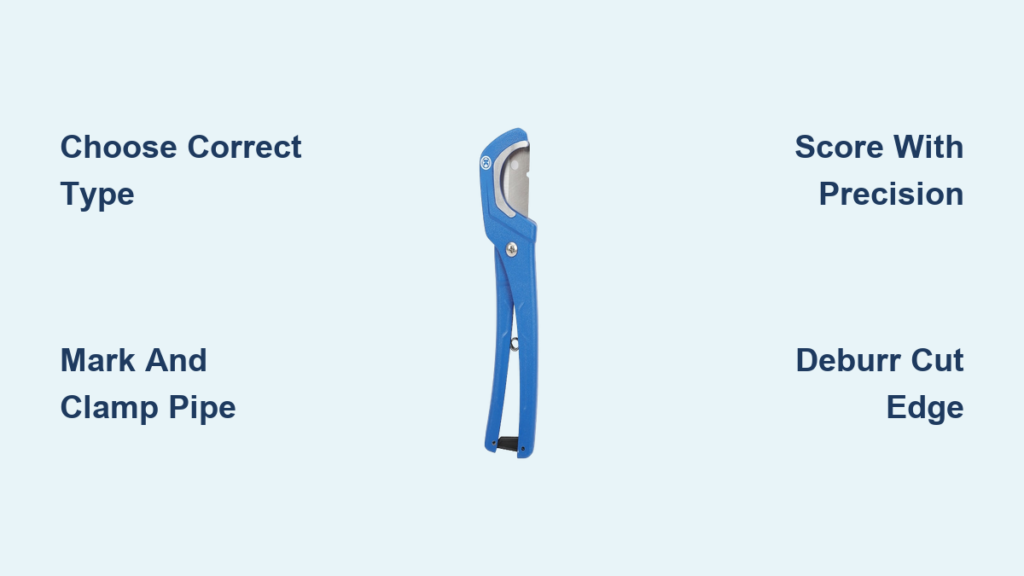
You’re elbow-deep in a bathroom renovation, marker line drawn on that stubborn copper pipe, and your Kobalt pipe cutter sits unused on the workbench. Every DIYer faces this moment: Will you get a clean, professional cut or another frustrating spiral mess? Mastering how to use a Kobalt pipe cutter transforms intimidating pipe work into precise, leak-proof results—whether you’re replacing a faucet or installing new lines. This guide cuts through the confusion with actionable steps verified by Kobalt’s engineering specs, ensuring your cuts are square, smooth, and ready for perfect fittings. Stop wasting time with hacksaws and start making flawless cuts in under 60 seconds per pipe.
Identify Your Kobalt Cutter Type Before Cutting
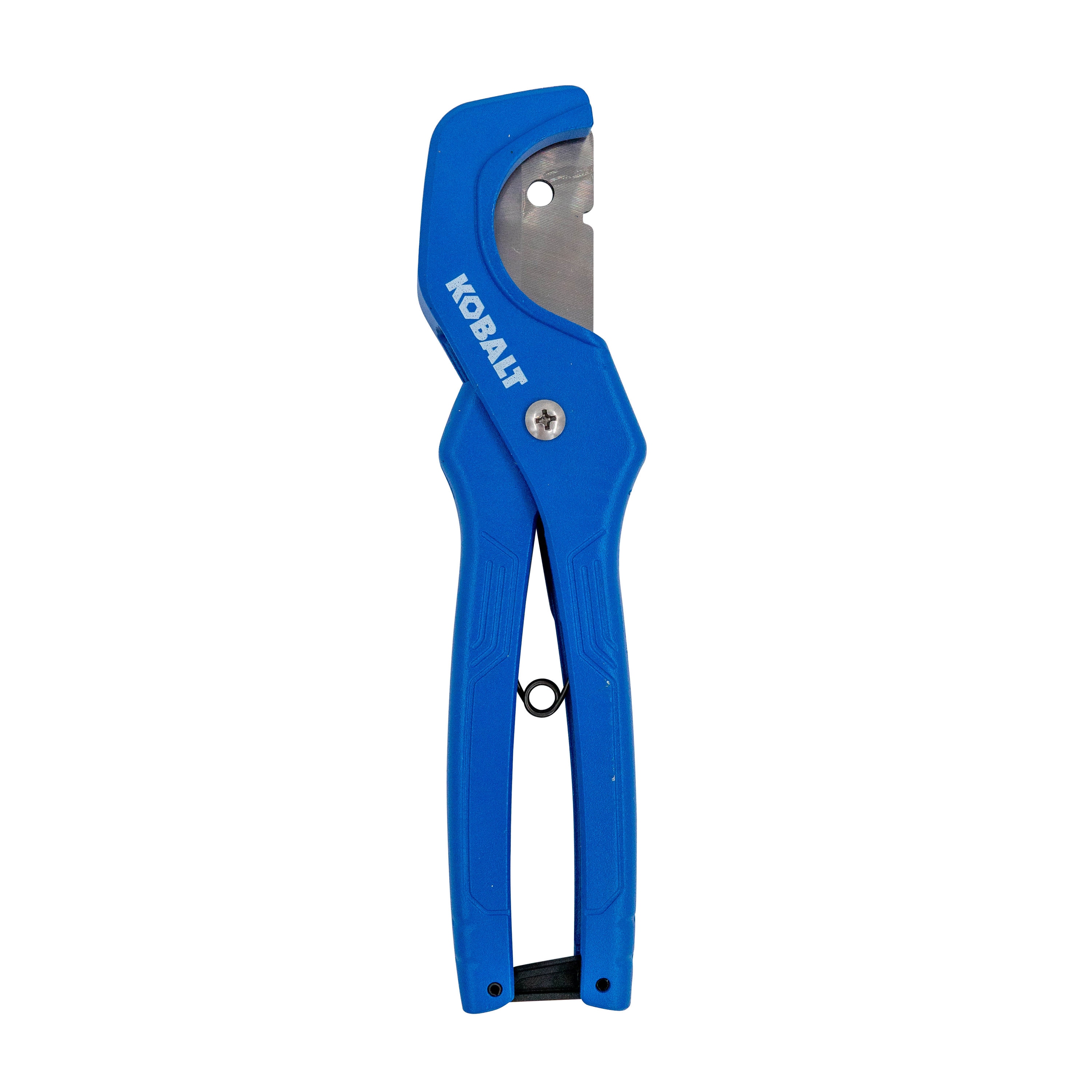
Kobalt offers three specialized cutter styles—using the wrong one risks cracked pipes or tool damage. Confirm your model matches your material before touching that pipe.
Wheel-Type Cutters feature a C-shaped frame with hardened steel cutting wheels opposite precision rollers. These dominate copper, brass, and aluminum pipes up to 1-1/8″ diameter. Look for the adjustment screw on the handle end—it controls cutting depth with surgical precision. Never force steel pipes through standard models; only use hardened-wheel variants rated for black iron.
PVC/Plastic Cutters operate like heavy-duty ratcheting scissors. Their single sharp blade slices through PVC, CPVC, PEX, and polypropylene without cracking. Check the jaw capacity stamp—most handle ½” to 1-1/4″ pipes. Ratcheting models tackle thick-walled Schedule 40 PVC, while non-ratcheting versions work only on small-diameter tubing under ¾”.
Compact Pipe Slices are single-size copper specialists. Each tool cuts only one diameter (marked on the body), rotating via spring-loaded mechanics. Their slim profile fits behind toilets or under sinks where full-circle cutters won’t rotate. Verify your pipe slice matches the pipe size exactly—no flexibility here.
Prepare Your Workspace and Materials for Zero Mistakes
Skipping prep guarantees crooked cuts. Spend 2 minutes securing everything correctly, and you’ll avoid hours of rework.
Mark and clamp your pipe with military precision. Use a scribe or fine-tip marker for a hairline cut mark. Then secure the pipe in a vise—never hold it by hand. Movement causes spiral cuts that ruin solder joints. Position the clamp within 2 inches of your cut line for maximum stability, especially on vertical pipes.
Gather essential safety gear: Safety glasses shield eyes from metal shards, while nitrile gloves improve grip and prevent slippage. Clear your workspace of debris that could knock pipes loose mid-cut. For PVC, wipe the pipe dry—moisture increases cracking risk.
Double-check compatibility using Kobalt’s specs. Copper cutters fail on rigid PVC, and PVC scissors shatter on metal. Measure pipe diameter with calipers if unsure—Kobalt cutters tolerate only 1/16″ variance before performance drops.
How to Use a Kobalt Pipe Cutter for Perfect Copper Cuts
Position and Align for 90-Degree Accuracy
Place the pipe between the cutting wheel and rollers. Turn the adjustment screw clockwise until you feel the wheel just kiss the pipe surface. Critical error check: Sight down the pipe to confirm the cutter sits perfectly perpendicular. Tilted alignment guarantees a beveled cut that leaks at fittings.
Create a Flawless Guide Groove
Tighten the screw ¼ turn more. Rotate the cutter 360 degrees with steady, light pressure—like turning a doorknob. You’ll score a faint circular groove. If the groove spirals, stop immediately. Clean wheel and rollers with a brass brush (steel brushes damage hardened surfaces). Persistent spirals mean your wheel is dull—replace it before continuing.
Complete the Cut Without Rushing
After each full rotation, tighten the screw ¼ turn. You should feel consistent resistance—not grinding force. Continue this cycle for 6-10 rotations until the pipe snaps cleanly. Pro tip: Apply 3 drops of light machine oil to the cutting wheel before starting. This extends wheel life by 40% and yields mirror-smooth edges. Rushing causes uneven cuts that require time-consuming reaming.
How to Use a Kobalt Pipe Cutter on PVC Without Cracks
Master Ratcheting Cutter Technique
Fully open the handles to engage the ratchet. Position the blade dead-center on your mark. Squeeze handles once to “bite” the pipe, then brace the lower jaw against your workbench. Keep pressure steady as you work the ratchet—never force the handles shut. On 1″+ PVC, warm the pipe with a hair dryer for 30 seconds; cold plastic cracks easily.
Handle Non-Ratcheting Models Correctly
These only work on thin-walled tubing under ¾”. Align the blade precisely, then squeeze handles in one smooth motion. Warning: If you feel resistance mid-cut, stop. Forcing causes jagged edges. For brittle old PVC, switch to a fine-tooth hacksaw—Kobalt cutters require some pipe flexibility.
How to Use a Kobalt Pipe Slice Cutter in Confined Spaces
Engage the Pipe Correctly
Push copper pipe through the opening until it seats firmly against the internal stop. Unlatch any protective cover first—forcing it closed damages the spring mechanism. Verify size compatibility: A ½” pipe slice won’t fit ⅝” pipe, and forcing it cracks the housing.
Rotate for Seamless Separation
Follow the directional arrow molded into the tool body. No arrow? Rotate so the leading edge moves ahead of the handle (clockwise for right-handed users). Critical technique: Rotate continuously for 10+ full turns—don’t stop mid-cut. The spring auto-advances the wheel, but pausing creates uneven pressure. You’ll feel the pipe separate cleanly when done.
Post-Cut Finishing Steps for Leak-Proof Joints

Deburr and Inspect Like a Pro
Scrape the inner pipe edge with a deburring tool at 45 degrees. For copper, run your finger along the cut—it should feel smooth, not jagged. Failing this step causes leaks: Burrs disrupt solder flow or O-ring seals. Inspect cuts under bright light—any angle over 2 degrees off-square requires recutting.
Maintain Your Kobalt Cutter Immediately
Wipe cutting wheels with a dry rag to remove metal shavings or PVC residue. Apply 2 drops of 3-in-1 oil to the adjustment screw and rollers. Store in a dry toolbox—never leave it on a damp basement floor. Cutting wheels last 50+ cuts with proper care but replace them if cuts slow or require excessive force.
Troubleshoot Common Problems in 60 Seconds
Fix Spiral Cuts Instantly
Spiral cuts mean misalignment or debris. Clean rollers with a toothpick, then reset the cutter perpendicular to the pipe. If it persists, the cutting wheel is worn—replace it using Kobalt’s universal wheel kit (model KCW-1).
Stop PVC Cracking Mid-Cut
Cracks indicate cold pipes or a dull blade. Warm the pipe with a heat gun (120°F max), then clean the blade with isopropyl alcohol. For brittle Schedule 80 PVC, switch to a ratcheting cutter—its gradual pressure prevents shock fractures.
Choose the Right Cutter for Your Pipe Material
Use Kobalt cutters when: You need solder-ready copper edges or solvent-weld-perfect PVC cuts. They outperform hacksaws on pipes under 1-1/4″ diameter, delivering square cuts in 30 seconds.
Switch to alternatives when: Cutting cast iron (use a reciprocating saw) or pipes over 1-1/2″ (rent a rotary cutter). In ultra-tight spaces where even pipe slices won’t rotate 180 degrees, use a tubing cutter with back-and-forth action.
Master Advanced Techniques for Tricky Jobs
Cut in Restricted Spaces with Arc Motion
On multi-wheel Kobalt cutters, rock the tool back-and-forth in a 120-degree arc instead of full rotations. Tighten the screw ⅛ turn per pass—this works in cabinets where pipes are within 3 inches of walls.
Optimize Cutting Speed with Lubrication
For copper, apply cutting oil sparingly to the wheel before scoring. For PVC, wipe the blade with silicone spray to reduce friction. Never use oil on plastic pipes—it degrades seals in solvent-weld fittings.
Perfect cuts start with the right Kobalt cutter and end with disciplined technique. By following these verified steps, you’ll transform pipe cutting from a dreaded chore into a satisfying, precision task. Remember: Clean cuts prevent 90% of plumbing leaks, and your Kobalt tool stays sharp for years with post-cut maintenance. Now grab that cutter—your next flawless joint awaits.