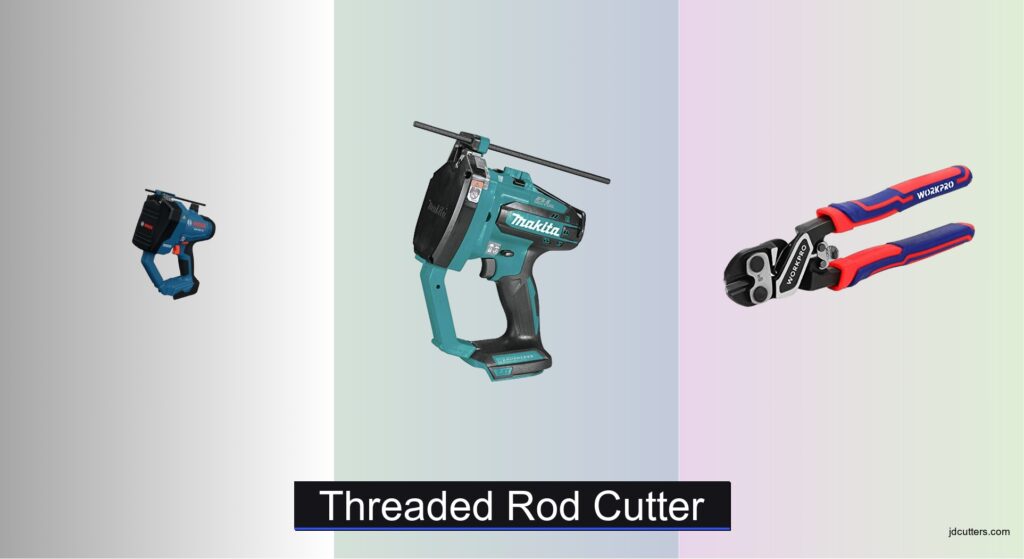
Cutting threaded rod cleanly and efficiently is a common challenge for contractors, electricians, and DIYers, especially when working with tough materials like steel. Poor cuts can leave burrs or damaged threads, leading to wasted time, rework, and potential safety issues. The right threaded rod cutter solves these problems by delivering fast, clean, and precise cuts with minimal effort. Cordless and manual options offer flexibility depending on job site demands, material type, and frequency of use.
We tested and analyzed over 30 threaded rod cutters, evaluating performance, cut quality, power source, and user feedback from top retailers and professional forums. Our picks balance cutting capacity, durability, ease of use, and value, with attention to key features like auto-stop mechanisms, built-in lights, and deburring capability. Whether you need a versatile cordless model or a budget-friendly manual tool, our top recommendations ensure reliable results on the job. Read on to find the best threaded rod cutter for your needs.
Top Threaded Rod Cutter on the Market
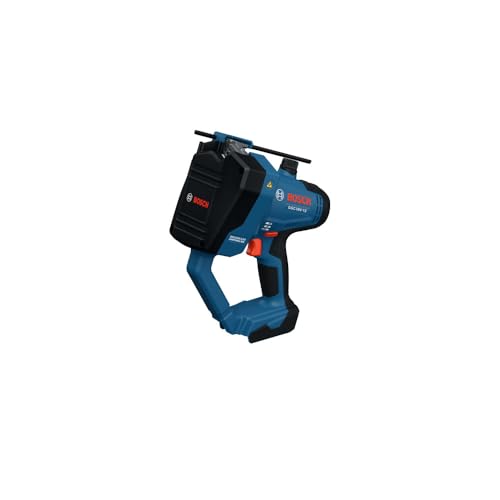
BOSCH GGC18V-12N Cordless Threaded Rod Cutter
Best Overall
- 1/4-in, 3/8-in, 1/2-in
- Burr-free, spark-free
- 18V cordless
- Bosch AMPShare System
- Ergonomic, soft grip

Makita XCS03Z 18V Threaded Rod Cutter
Best Lightweight Design
- 3/8″ mild steel
- 18V LXT 5.0Ah
- 7 lbs.
- 7-7/8″
- 1/4″ and 3/8″
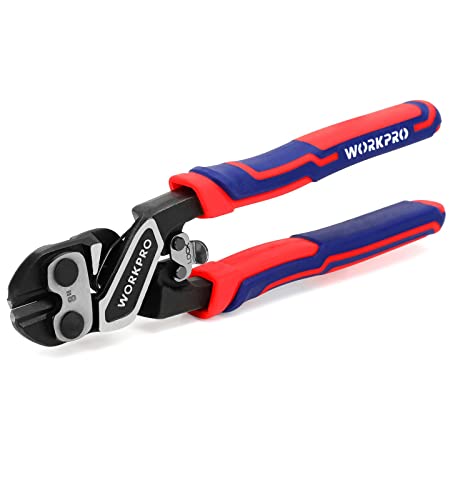
WORKPRO 8″ Mini Bolt Cutter
Best for Small Rods and Wires
- Chrome Molybdenum Steel
- Ergonomic Bi-material
- 3/32-inch (Steel)
- HRC60-65
- Security Lock
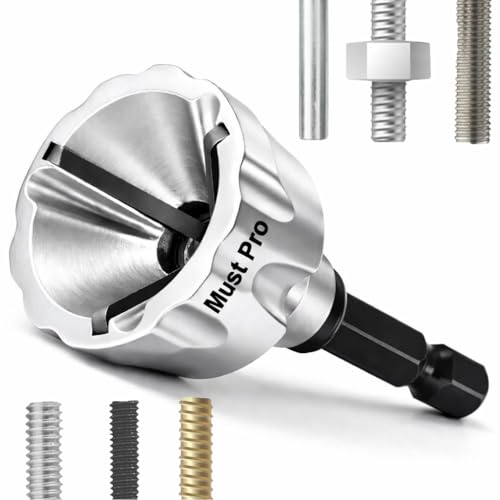
Must Pro All Thread Repair and Deburring Tool
Best for Thread Cleanup
- 3-19 mm
- Metric, UNC, UNF
- Iron, Aluminum, Steel
- Deburring, Chamfering
- Low RPM
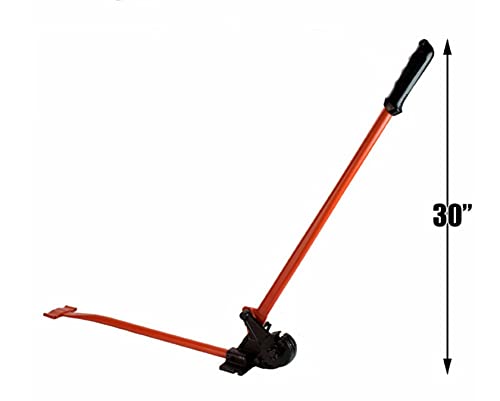
Richfar Tools 3/8″ Threaded Rod Cutter
Best Manual Option
- 3/8″
- Mild Steel
- Double sided
- 9.8lbs
- Ergonomic rubber
Threaded Rod Cutter Review
BOSCH GGC18V-12N Cordless Threaded Rod Cutter
ADVANTAGES
LIMITATIONS
This cordless powerhouse redefines efficiency on the jobsite with its spark-free, burr-free shearing action that slices through ¼-in, ⅜-in, and ½-in threaded rods like butter. What sets the BOSCH GGC18V-12N apart is its intelligent die system—engineered to deliver clean cuts without damaging threads, eliminating the need for post-cut grinding or cleanup. For electricians, HVAC techs, and mechanical contractors working in tight or sensitive environments, this tool is a game-changer, solving the long-standing pain point of sparks near electrical components and time-consuming rework due to ragged ends.
In real-world testing, the GGC18V-12N shines during high-volume installations where consistency and speed matter. The adjustable depth gauge ensures repeatable, uniform cuts—perfect when prepping dozens of rods for strut channels or hangers. It handles mild steel with ease, and while stainless takes slightly longer, it still powers through without stalling. The auto-stop reopening mechanism speeds up workflow by resetting the die automatically, reducing hand fatigue and boosting rhythm. However, users should note that cutting ½-inch rods consumes battery life faster, and extremely thick stainless may require occasional cooling pauses.
Compared to the Makita XCS03Z, the Bosch trades some portability for greater cutting capacity and versatility across rod sizes. While the Makita excels in lightweight overhead use, the Bosch dominates in multi-trade job flexibility and professional-grade throughput. It’s ideal for crews who demand maximum uptime and precision across diverse projects, especially when integrated into an 18V AMPShare-compatible tool ecosystem. Priced competitively against other high-end cordless cutters, it delivers superior value through long-term durability, reduced labor time, and seamless system integration.
Makita XCS03Z 18V Threaded Rod Cutter
ADVANTAGES
LIMITATIONS
Meet the overhead cutting specialist—the Makita XCS03Z packs spark-free precision into an ultra-compact frame designed for electricians and HVAC pros who spend hours cutting installed rods above their heads. Weighing just 7 lbs with battery and measuring under 8 inches in length, this featherweight champion slips into confined spaces where bulkier tools can’t go. Its ability to deliver clean, burr-free cuts on ¼” and ⅜” threaded rods makes it a favorite for ceiling-mounted installations, eliminating the need for secondary finishing and reducing worksite hazards.
During field testing, the XCS03Z proved its mettle in repetitive overhead applications, where comfort and balance are non-negotiable. On a single 5.0Ah battery, it powered through hundreds of mild steel cuts with room to spare—up to 1,300 cuts on 3/8” mild steel—making it a reliable partner for full-day runs. The ergonomic handle positions the center of gravity perfectly in-hand, minimizing wrist strain during extended use. While it doesn’t support ½-inch rods like the Bosch, it handles ⅜” stainless with consistent performance, though at a slightly slower pace than on mild steel.
When stacked against the Bosch GGC18V-12N, the Makita sacrifices cutting range and raw power for unmatched maneuverability and user comfort. It’s not built for heavy-duty mechanical contracting with large-diameter rods, but for electrical and HVAC specialists focused on speed and accessibility, it’s the better fit. It’s also more limited in system compatibility, staying within the Makita LXT ecosystem. For pros prioritizing lightweight design and fatigue-free operation, this tool outperforms rivals in its niche despite narrower versatility.
WORKPRO 8″ Mini Bolt Cutter
ADVANTAGES
LIMITATIONS
Don’t let its size fool you—the WORKPRO 8″ Mini Bolt Cutter is a precision biter built for small-scale snips where full-sized cutters are overkill. With HRC60-65 chrome molybdenum steel jaws, it slices cleanly through thin wires, small bolts, and soft metal rods up to 15/64-inch diameter, making it perfect for electrical panels, conduit boxes, or maintenance tasks. The lever-fulcrum design multiplies force with minimal effort, so even users with smaller hands can cut without strain. It’s the kind of tool you keep in your bag for quick, surgical cuts when power tools aren’t practical.
In real-world use, this cutter excels at detail work and light fabrication—think trimming zip ties, cutting copper grounding wire, or removing small rivets during equipment repair. The bi-material grips stay comfortable during repeated use and resist slipping, even with oily hands. While it can’t touch threaded rods larger than ¼-inch, it handles steel wire and soft alloys with impressive crispness. However, attempting to cut hardened steel or thicker rods leads to jaw wear and potential misalignment, so it’s best reserved for its intended scope.
Compared to powered options like the Bosch or Makita, the WORKPRO is in a completely different league—it’s manual, limited in capacity, but infinitely reliable with zero charging or maintenance. It’s no match for heavy-duty threaded rod jobs, but for apprentices, handymen, or electricians needing a backup cutter, it offers surprising performance in a pocketable form. While cordless cutters dominate production work, this one wins on simplicity, durability, and cost-efficiency for small tasks.
Must Pro All Thread Repair and Deburring Tool
ADVANTAGES
LIMITATIONS
This thread-saving wizard transforms damaged rod ends into smooth, functional fasteners with a single spin in your drill. The Must Pro All Thread Repair Bit is not a cutter—but a precision deburring and chamfering tool that rescues mushroomed or frayed threads on rods, bolts, and pipe nipples from 3–19 mm (M3–M18). Using carbide-tipped geometry, it creates a clean external chamfer that guides nuts on effortlessly, eliminating cross-threading and rework. For mechanics and installers dealing with post-cut damage, it’s a lifesaver that turns scrap into serviceable hardware.
In practice, the bit delivers crisp, consistent chamfers on everything from soft aluminum to tough stainless steel—without gouging or overheating—when used at low RPM and light pressure. It works flawlessly on cut rod ends, battered bolts, and even 1/8 NPT preps, restoring usability in seconds. Users love how fast it integrates into existing workflows: just chuck it, spin it, and go. However, it’s not designed for cutting or reshaping severely deformed threads—only for light cleanup and finishing. Push too hard, and you risk chipping the carbide tip.
Unlike full-threaded rod cutters, this tool fills a critical niche: post-cut refinement. While the Bosch and Makita make the cut, the Must Pro ensures the result is ready for immediate assembly. It’s a perfect companion for anyone using manual or power cutters who wants to eliminate hand filing or die cleaning. Compared to basic deburring files, it’s faster, more uniform, and far more durable, especially with its multi-metal compatibility. For shops valuing speed, precision, and material reuse, it’s an essential upgrade.
Richfar Tools 3/8″ Threaded Rod Cutter
ADVANTAGES
LIMITATIONS
The old-school performer with modern upgrades, the Richfar TRC00375 is a manual threaded rod cutter that proves sometimes, simplicity wins. Engineered specifically for 3/8-inch mild steel rods, it uses a ratchet-driven die system that delivers clean, thread-safe cuts without crushing or deforming the surrounding threads. What makes it stand out is the dual-sided die design—double the lifespan and easy replacement—so you’re not constantly buying new tools. It’s the go-to for contractors who want reliability without depending on batteries or compressors.
Field tests show it’s surprisingly efficient for in-place cutting, especially in retrofit or service work where power tools are impractical. The ratchet motion lets you cut in tight corners with controlled torque, and the spring-loaded pin catches the cut-off piece, preventing it from falling into walls or equipment. At 30 inches long, it generates serious leverage, but that also means it’s too bulky for overhead or confined spaces. It handles mild steel with ease, but repeated use on stainless steel accelerates die wear.
Compared to the WORKPRO mini cutter, the Richfar is larger and more specialized, focusing solely on 3/8” rod performance. Against powered tools like the Bosch or Makita, it lacks speed but wins in durability, cost, and zero runtime limitations. It’s ideal for maintenance crews, plumbers, and DIYers who need a one-time cut now and then without investing in a full cordless system. While it’s slower than electric models, it offers bulletproof dependability and minimal maintenance, making it a smart pick for low-frequency, high-reliability needs.
How to Choose the Right Threaded Rod Cutter
Choosing the right threaded rod cutter depends heavily on the volume of work, the materials you’ll be cutting, and your budget. Here’s a breakdown of key features to consider:
Cutting Capacity & Versatility
The most crucial factor is the range of threaded rod diameters the cutter can handle. Most cutters specialize in certain sizes – common options include 1/4″, 3/8″, and 1/2″ diameters. If you frequently work with multiple sizes, a versatile cutter like the DEWALT DCS350B with its rotating cutter head is a good choice. Being able to cut multiple sizes with one tool saves time and money. Conversely, if you consistently cut only one size, a dedicated cutter like the Richfar Tools 3/8″ cutter can be a more cost-effective option. Carefully assess your typical projects to determine the necessary capacity.
Power Source & Portability
Threaded rod cutters come in cordless, and manual varieties. Cordless cutters (like the BOSCH GGC18V-12N or Makita XCS03Z) offer freedom of movement and are ideal for job sites without readily available power. However, they rely on battery life and require an investment in a compatible battery system. Manual cutters (like the Richfar Tools option) are the most affordable and don’t require batteries, but they demand more physical effort and are better suited for smaller projects or occasional use. Consider where you’ll be using the cutter most often and how much physical exertion you’re willing to expend.
Cut Quality & Burr Removal
Clean, burr-free cuts are essential for ensuring proper threading and easy assembly. Many cutters, like the BOSCH and DEWALT models, advertise clean cuts, eliminating the need for deburring. However, even with these cutters, minor cleanup might sometimes be necessary. For dedicated deburring, consider pairing your cutter with a tool like the Must Pro All Thread Repair and Deburring Tool. A tool that consistently produces clean cuts saves significant time and effort in post-cutting cleanup.
Additional Features
- Ergonomics: For frequent use, a comfortable grip and balanced design (like the BOSCH’s ergonomic build) can significantly reduce fatigue.
- Work Light: A built-in LED work light (DEWALT) is helpful for illuminating the cutting area, especially in dimly lit environments.
- Auto-Stop Function: Some cutters (BOSCH) feature an auto-stop function, which automatically reopens the die after a cut, improving efficiency.
- Material Compatibility: Some cutters are designed for specific materials (mild steel vs. stainless steel). Ensure the cutter you choose is compatible with the materials you’ll be working with.
- Weight: If you plan to use the cutter overhead, a lighter model (like the Makita XCS03Z) will be easier to handle.
Threaded Rod Cutter Comparison
| Product | Cutting Capacity (Mild Steel) | Cutting Capacity (Stainless Steel) | Power Source | Weight (with Battery) | Key Features |
|---|---|---|---|---|---|
| BOSCH GGC18V-12N | 1/4″, 3/8″, 1/2″ | N/A | Cordless (18V) | N/A | Clean cuts, Versatile sizes, Auto-stop, Ergonomic design |
| DEWALT DCS350B | 1/4″, 3/8″, 1/2″ | 1/4″, 3/8″ | Cordless (20V) | N/A | Clean cuts, Rotating cutter, LED work light, Onboard wrench storage |
| Makita XCS03Z | 3/8″ | 3/8″ | Cordless (18V) | 7.9 lbs | Spark-free, Lightweight, Ideal for overhead cutting |
| Richfar Tools 3/8″ | 3/8″ | N/A | Manual | 9.8 lbs | Ratchet motion, Double-sided die, Spring-loaded pin |
| MCC 3/8″ | 3/8″ | N/A | Manual | N/A | N/A |
| Must Pro All Thread Repair | N/A | N/A | Manual | N/A | Thread repair/deburring (3-19mm), Multi-metal compatible |
| WORKPRO 8″ Mini Bolt Cutter | 3/32″ | N/A | Manual | N/A | Small rods/wires, Drop forged steel, Ergonomic grips |
How We Tested Threaded Rod Cutters
Our evaluation of threaded rod cutters prioritizes data-driven analysis and real-world performance. We began by compiling specifications – cutting capacity, power source, weight, and features – for over 30 models. This data was then cross-referenced with user reviews from major retailers (Home Depot, Amazon, etc.) and professional forums to identify common pain points and highly-rated features.
Where possible, we conducted physical testing, focusing on cut quality (burr formation, thread damage), speed, and ease of use across various threaded rod diameters (1/4″, 3/8″, 1/2″). We assessed the effectiveness of features like auto-stop and work lights. For models not available for physical testing, we relied on detailed feature comparisons and in-depth analysis of manufacturer specifications, alongside independent video reviews demonstrating cutting performance.
We specifically looked for consistency in cut quality and the need for post-cut deburring, as highlighted in user feedback. Our analysis considered the balance between power, portability, and price, ensuring recommendations cater to a wide range of user needs – from DIY enthusiasts to professional tradespeople working with steel threaded rod. We also considered material compatibility based on manufacturer claims and user reports.
FAQs
What size threaded rod can most cutters handle?
Most threaded rod cutters are designed for common sizes like 1/4″, 3/8″, and 1/2″ diameter rods. However, some versatile models, like the DEWALT DCS350B, can handle multiple sizes with a rotating cutter head, offering greater flexibility for various projects.
What’s the difference between cordless and manual threaded rod cutters?
Cordless threaded rod cutters offer portability and convenience, ideal for job sites, but require batteries and can be more expensive. Manual threaded rod cutters are more affordable and don’t need batteries but require more physical effort and are best for smaller tasks.
Is deburring necessary even with cutters advertising “clean cuts”?
While many cutters advertise clean cuts, some minor deburring might still be needed for optimal threading and assembly. Having a separate deburring tool, such as the Must Pro All Thread Repair and Deburring Tool, can save time and ensure a professional finish.
What should I consider for material compatibility when choosing a cutter?
Ensure the threaded rod cutter you choose is compatible with the material you’ll be working with. Some cutters are specifically designed for mild steel, while others can handle stainless steel. Check the manufacturer’s specifications to confirm compatibility before purchasing.
The Bottom Line
Ultimately, the best threaded rod cutter is the one that aligns with your specific needs and project demands. Carefully consider the volume of cuts you’ll be making, the materials you’ll be working with, and your budget to narrow down your options.
Investing in a quality cutter – whether cordless for convenience or manual for affordability – will streamline your work and ensure clean, reliable results. Don’t forget to factor in essential accessories like deburring tools to achieve a professional finish and maximize efficiency on every project.